Share:
36 views
#مرض سيفر #ألم كعب الأطفال #إصابات الملاعب #Severs Disease #Physiotherapy Cairo
What Is Sever’s Disease?
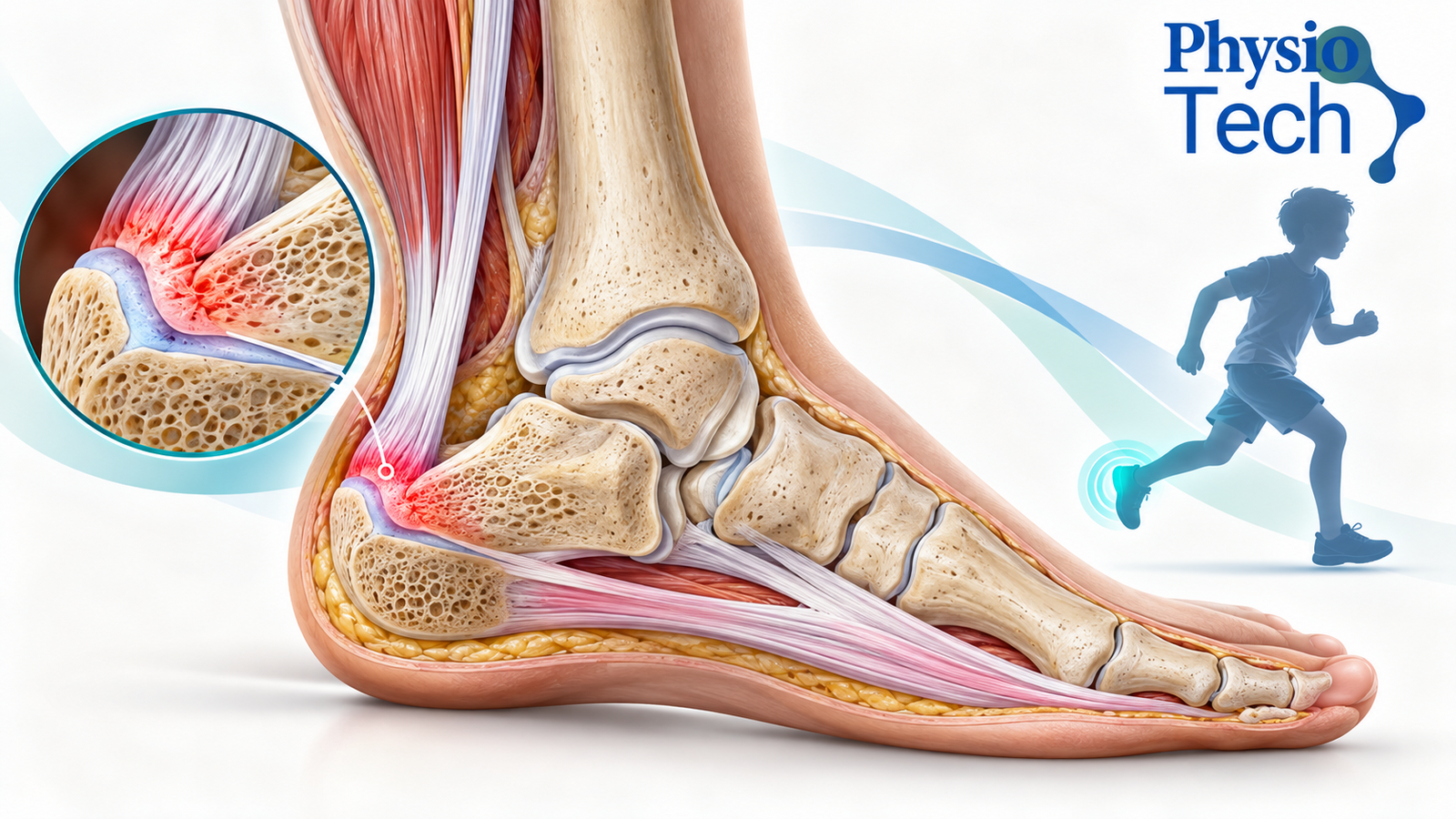
Sever’s disease is irritation of the heel growth plate in children, commonly between 8 and 14 years, and is aggravated by running and jumping during growth.
A diagnostic label does not describe the whole patient experience. Irritability, symptom duration, work demands, activity level, sleep and confidence in movement can change the plan even when two people share the same diagnosis.
Common Symptoms
- Back or underside heel pain during sport
- Toe walking or limping after activity
- Pain when the sides of the heel are squeezed
- Improvement with rest and recurrence with load
Causes and Contributing Factors
Training spikes during growth, hard surfaces, footwear and calf capacity may contribute. It is not the same as Achilles damage or an adult heel spur.
Conditions That Can Look Similar
Achilles injury, stress fracture, ankle sprain, infection and neural pain.
How PhysioTech Assesses the Condition
Age, growth and training schedule are reviewed before examining the heel, ankle, calf, gait, jumping and footwear. Imaging is usually unnecessary in a typical pattern but is considered for unusual signs.
Measures We Retest
We record pain during a defined task, motion, strength, capacity and movement quality, then retest rather than relying on general impressions alone. One or two tests are linked to the patient’s goal—such as stairs, walking, running or lifting the arm—so progress is visible and measurable.
Is Imaging Required?
Imaging is not automatic for every patient. It is considered after significant trauma, a red flag, suspected fracture or another condition needing a medical decision, or when progress does not match the expected course. Imaging findings still need clinical correlation because structural changes may also appear in people without pain.
Sever’s Disease Treatment at PhysioTech
Irritating running and jumping are temporarily reduced, with suitable footwear and a heel cup in selected cases. Ankle motion, calf and foot strength are progressed before speed and jumping return.
Stage 1: Load Management and Symptom Control
We identify loads that need temporary modification while preserving as much safe activity as possible. The aim is not complete rest, but a tolerable dose that can be progressively increased. Speed, range, repetitions or recovery time may be adjusted instead of banning the whole activity.
Stage 2: Restore Movement and Strength
Exercises are selected for current capacity, with range, resistance and volume adjusted. There is no single best exercise for everyone; the important feature is a dose that can progress and addresses findings that matter to function.
Stage 3: Return to Activity, Work or Sport
Exercise progresses from measurable basic tasks toward work or sport demands. Pain, swelling, next-day response and movement quality guide the rate of progression. Before full return, the actual task or a close simulation is tested rather than relying only on comfort at rest.
Daily Strategies That Reduce Flare-Ups
Avoid sudden spikes in activity, distribute load across the week and monitor the next-day response. Sleep, general activity and a simple maintenance-strength program matter. A flare does not always mean new damage; the load may simply need adjustment before rebuilding.
The PhysioTech Treatment Philosophy in Cairo
At PhysioTech Clinic in Zahraa El Maadi, Cairo, treatment is not built on an imaging label alone. We connect symptoms with movement, strength, capacity, activity load and the goal the patient wants to regain, then record clear baseline measures and retest them. Manual therapy or adjuncts such as therapeutic ultrasound or electrotherapy may be used for a defined clinical purpose, but they do not replace therapeutic exercise, graded loading and reassessment.
Red Flags That Need Prompt Medical Review
Severe night pain, fever or redness, major swelling, significant trauma, inability to bear weight or persistent visible limp.
Frequently Asked Questions
Is Sever’s disease dangerous?
It is usually a growth-related condition managed conservatively.
Does it need a cast?
Not routinely; only severe cases may need temporary protection directed by a clinician.
When can sport resume?
When walking, running and jumping are possible without limp or sustained symptom increase.
When Should You Book an Assessment?
If Sever’s Disease limits movement, work or sport, you can book an individual assessment at PhysioTech Clinic in Zahraa El Maadi, Cairo, to build a plan around your presentation and goals.