Share:
100 views
#خلع الكتف #Shoulder Dislocation #Bankart #عدم ثبات الكتف #تأهيل الكتف #علاج طبيعي في المعادي
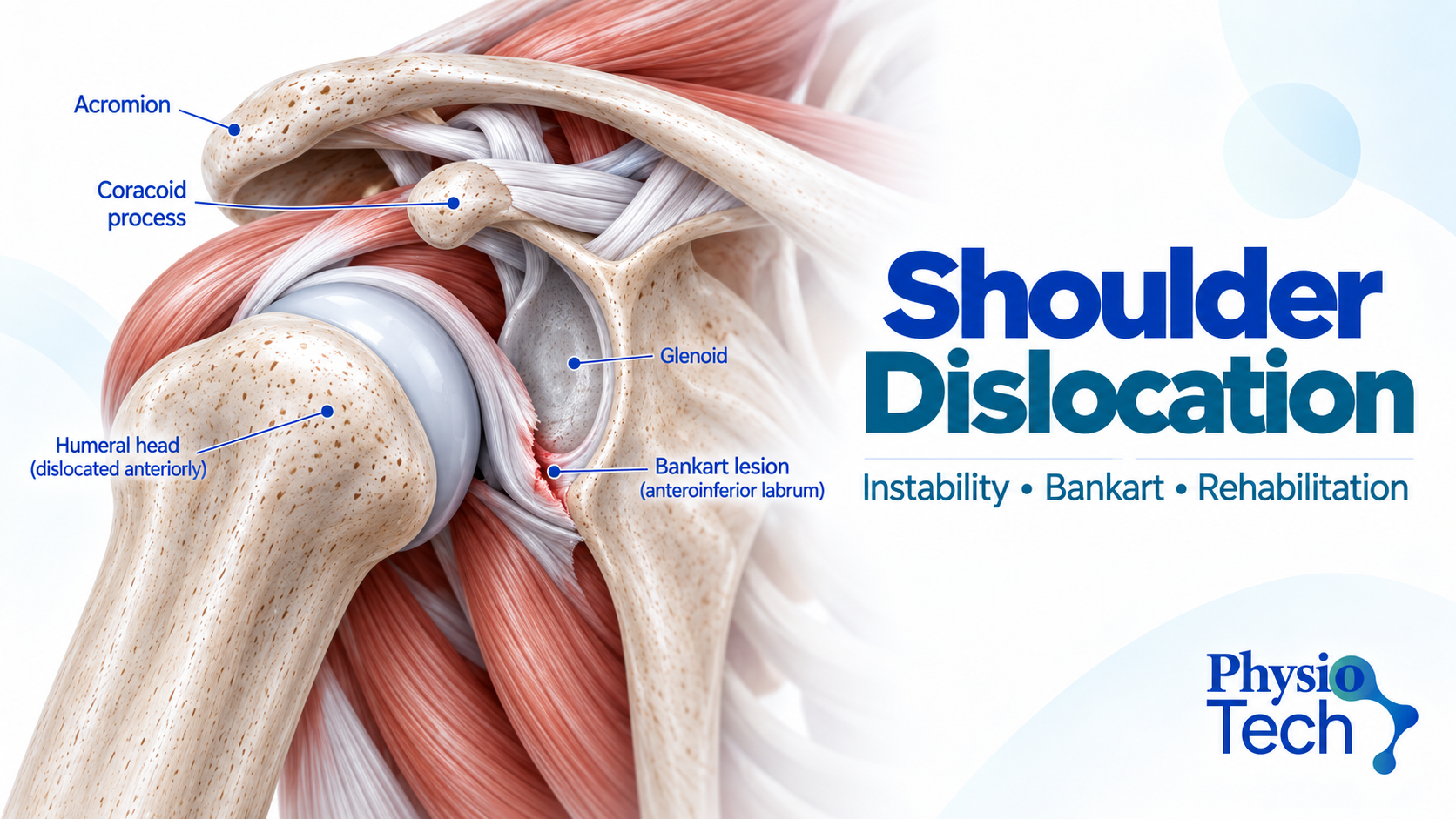
A shoulder dislocation occurs when the humeral head leaves the glenoid socket. It may be complete or partial, and anterior dislocation is the most common pattern. Associated injury can involve the labrum, ligaments, bone, rotator cuff or nerves. An acute dislocation needs urgent medical assessment and should not be reduced at home.
اقرأ المقال بالعربيةWhat Are the Symptoms of Shoulder Dislocation?
Typical signs include severe pain, visible deformity, inability to move the arm, swelling and bruising. Numbness or weakness may occur if nerves are affected. Even when a partial dislocation relocates spontaneously, assessment is still important because the labrum and ligaments may be injured.
When Is It an Emergency?
Acute dislocation is an emergency, particularly with increasing numbness, major weakness, a cold or discoloured hand, high-energy trauma or suspected fracture. X-ray and a neurovascular examination are commonly required before and after reduction.
What Is a Bankart Lesion?
A Bankart lesion involves the anteroinferior labrum and may occur with anterior dislocation. It does not automatically mean surgery is required. Age, activity level, recurrence, bone loss and sport demands influence treatment decisions.
Why Can Dislocation Recur?
Recurrence can be related to labral or ligament injury, bone loss, poor neuromuscular control or returning too early to collision or overhead sport. Younger active patients often have greater recurrence risk, so non-operative and surgical options should be discussed with a shoulder specialist according to individual risk factors.
Physiotherapy Stages After Dislocation
Protect and Restore Safe Motion
After reduction and medical review, rehabilitation starts with gradual motion within a safe range. Precautions differ according to dislocation direction, associated injury and the selected treatment.
Rebuild Muscle Function and Control
Exercise progresses from gentle activation to strengthening of the rotator cuff and scapular muscles. The goal is not strength alone; it is also control of the humeral head and shoulder blade during reaching, pushing and pulling.
Prepare for Work and Sport
Endurance, speed, overhead positions, pushing and throwing are added according to activity demands. Motion, strength, control and confidence should be assessed before full return rather than relying only on elapsed time.
When Might Surgery Be Considered?
Surgery may be discussed for recurrent dislocation, persistent instability, significant bone or soft-tissue injury, or a high recurrence risk in selected athletes. The shoulder surgeon determines the appropriate procedure, and postoperative rehabilitation remains essential for restoring function.
Role of Adjunct Treatments
Manual therapy may assist selected mobility restrictions when medically appropriate. Kinesio taping or electrotherapy may help particular symptoms. Dry needling or therapeutic ultrasound may be considered for associated muscular problems in selected cases, but they do not correct structural instability and cannot replace assessment, exercise therapy, motor control and progressive loading.
Shoulder Instability Rehabilitation in Zahraa El Maadi, Cairo
At PhysioTech Clinic in Zahraa El Maadi, Cairo, we assess shoulder dislocation and instability and provide individualized rehabilitation to restore motion, rotator-cuff strength, scapular control and readiness for work or sport, while following orthopaedic precautions when required.
Frequently Asked Questions
Can Physiotherapy Prevent Another Dislocation?
There is no guarantee. Rehabilitation improves strength, control and function, while recurrence risk is also influenced by age, injury pattern, bone loss, sport and previous dislocations.
Can I Move My Shoulder Immediately?
Movement starts according to medical instructions and the injury pattern. Unnecessary prolonged immobilization can increase stiffness, while inappropriate early motion may irritate healing tissues.
When Can I Return to the Gym?
Return begins with safe low-load exercise and progresses according to motion, strength and stability. Pressing and overhead lifting require higher criteria than daily activity.
Does Every Bankart Lesion Need Surgery?
No. Decisions consider symptoms, recurrence, age, sport, bone loss, examination and imaging.
Book a shoulder assessment at PhysioTech Clinic in Zahraa El Maadi, Cairo, for an individualized rehabilitation plan.