Share:
40 views
#متلازمة الجيب الرصغي وألم خارج الكاحل #Sinus Tarsi Syndrome #علاج طبيعي #physiotherapy #Cairo
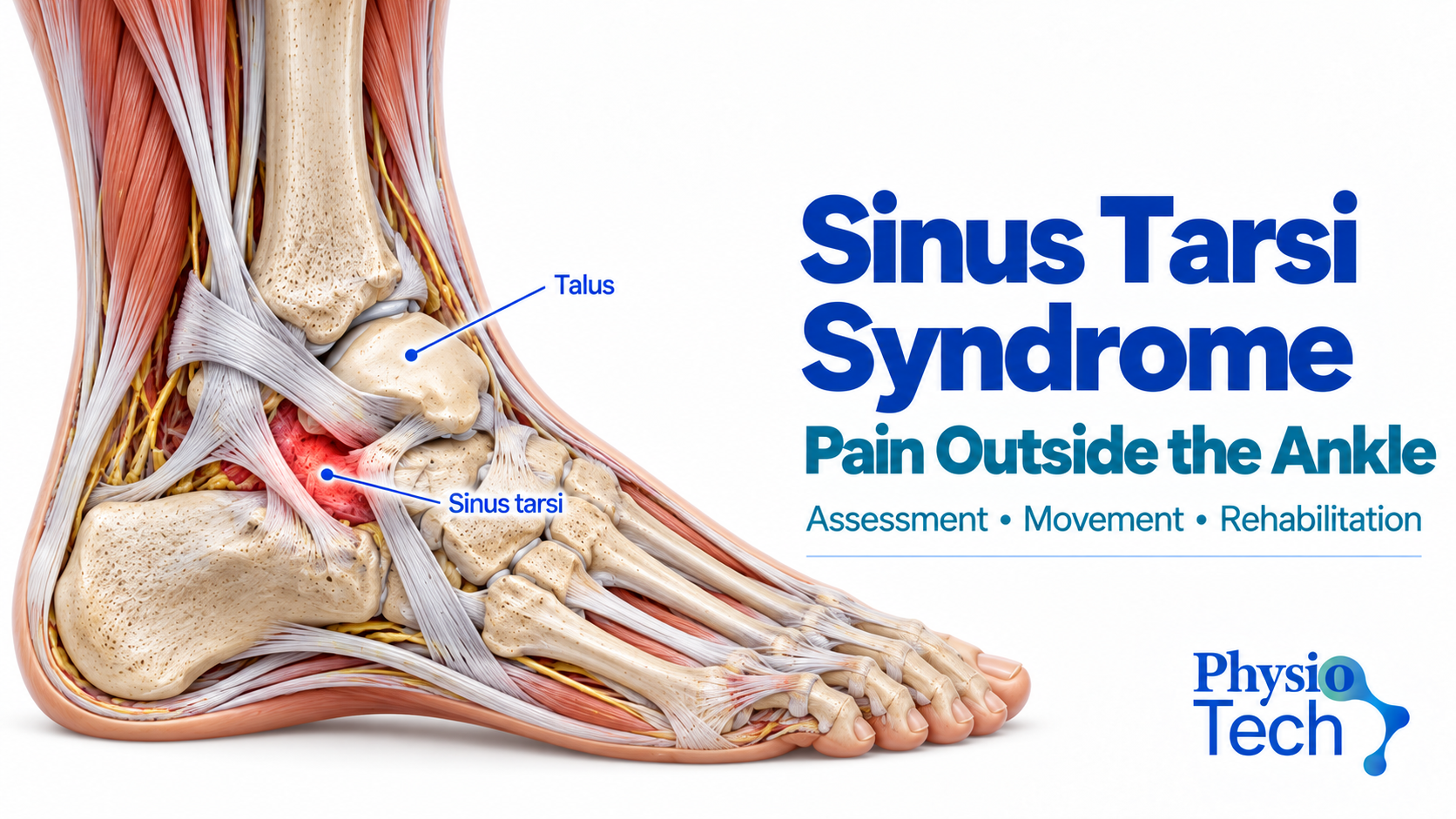
Deep pain in front of and below the outer ankle bone, especially after a sprain or on uneven ground, may be described as sinus tarsi syndrome. The term identifies an anatomical space between the talus and calcaneus rather than one automatically proven damaged tissue.
اقرأ المقال بالعربيةAt PhysioTech Clinic in Zahraa El Maadi, Cairo, treatment begins with the person’s symptoms, examination and goals rather than a technique selected from a label alone. This article explains the condition but cannot replace an individual assessment or urgent care when warning signs are present.
What Is Happening Anatomically?
The sinus tarsi contains small ligaments, fatty tissue, vessels and sensory nerves and contributes to awareness of foot position. A sprain may affect surrounding tissue and movement control. Pain can coexist with ankle instability, but the two terms are not interchangeable.
Symptoms You May Notice
Local outer ankle pain, reduced confidence on uneven surfaces and discomfort with direction changes are common. Pain behind the fibula may fit peroneal tendons more closely, while tingling requires a neurological screen.
How Is It Assessed?
We review previous sprains, precise pain location, instability episodes and activity demands. Examination includes ankle and subtalar movement, ligaments, peroneal tendons, calf strength and balance. Imaging is considered when it would change management or a bony or cartilage injury is suspected.
PhysioTech does not base a diagnosis on one scan or one provocative test. We connect the history with symptom distribution, daily behaviour, movement, strength and the tasks that matter to the patient. The working explanation is tested by changing a relevant load or treatment variable and measuring the response. If the findings do not fit, the diagnosis is reconsidered and the examination or referral pathway is expanded. This keeps care focused on measurable function rather than a label alone.
What Else Could It Be?
Chronic ankle instability, peroneal tendinopathy, osteochondral injury, stress injury and superficial nerve irritation can overlap. Tenderness at one point is not a complete diagnosis.
Physiotherapy at PhysioTech
First Phase: Settle Provocative Load
Uneven-ground, running and jumping exposure may be temporarily adjusted. Mobility, calf and lateral ankle strength and single-leg control are then progressed. Sport rehabilitation moves from stable surfaces to cutting, jumping and landing. A brace may be a short-term aid when it supports safe participation.
Next Phase: Build Capacity
As symptoms settle, therapeutic exercise and graded loading are matched to your response and goals. Manual or symptom-relief techniques may be adjuncts when useful, but they do not replace exercise and repeated assessment. Recovery timelines vary with severity, health and activity demands.
A key part of the plan is understanding why each exercise was chosen and how to adjust its dose. We agree on an acceptable symptom response during activity, review what happens later and the next day, and then progress repetitions, resistance, speed or task complexity. The aim is not to make a session feel hard; it is to improve capacity for work, walking and sport without an escalating flare. Sleep, workload distribution, general health and confidence in movement are considered alongside local tissue loading.
Progression and Return to Activity
How Do We Measure Progress?
Walking tolerance, single-leg control, landing quality and next-day response guide progression. Persistent deep pain, swelling or locking warrants reassessment and possible specialist review.
What Can You Do at Home?
Choose stable ground and comfortable footwear during a flare and avoid repeatedly testing the ankle with painful hops. Maintain a recoverable level of movement and exercise.
When Is Medical Review Needed?
Inability to bear weight after trauma, major swelling, deformity, focal bony pain or worsening sensory loss needs medical assessment.
Frequently Asked Questions
Is the sinus tarsi a ligament?
No. It is a space containing several tissues and small ligaments.
Does all outer ankle pain come from it?
No. Tendons, ligaments, joints and nerves are important alternatives.
Is a brace enough?
It may help temporarily, while strength, balance and activity tolerance remain central.
Book an Assessment in Cairo
If Sinus Tarsi Syndrome affects work, walking or sport, book an individual assessment at PhysioTech in Zahraa El Maadi, Cairo. We explain the findings clearly, decide whether physiotherapy is appropriate or medical referral is needed, and agree on measurable rehabilitation goals.