Share:
106 views
#التأهيل قبل الرباط الصليبي #ACL Prehab #جراحة الرباط الصليبي #تقوية الركبة #إصابات الملاعب
# ACL Prehabilitation: Preparing Before Surgery
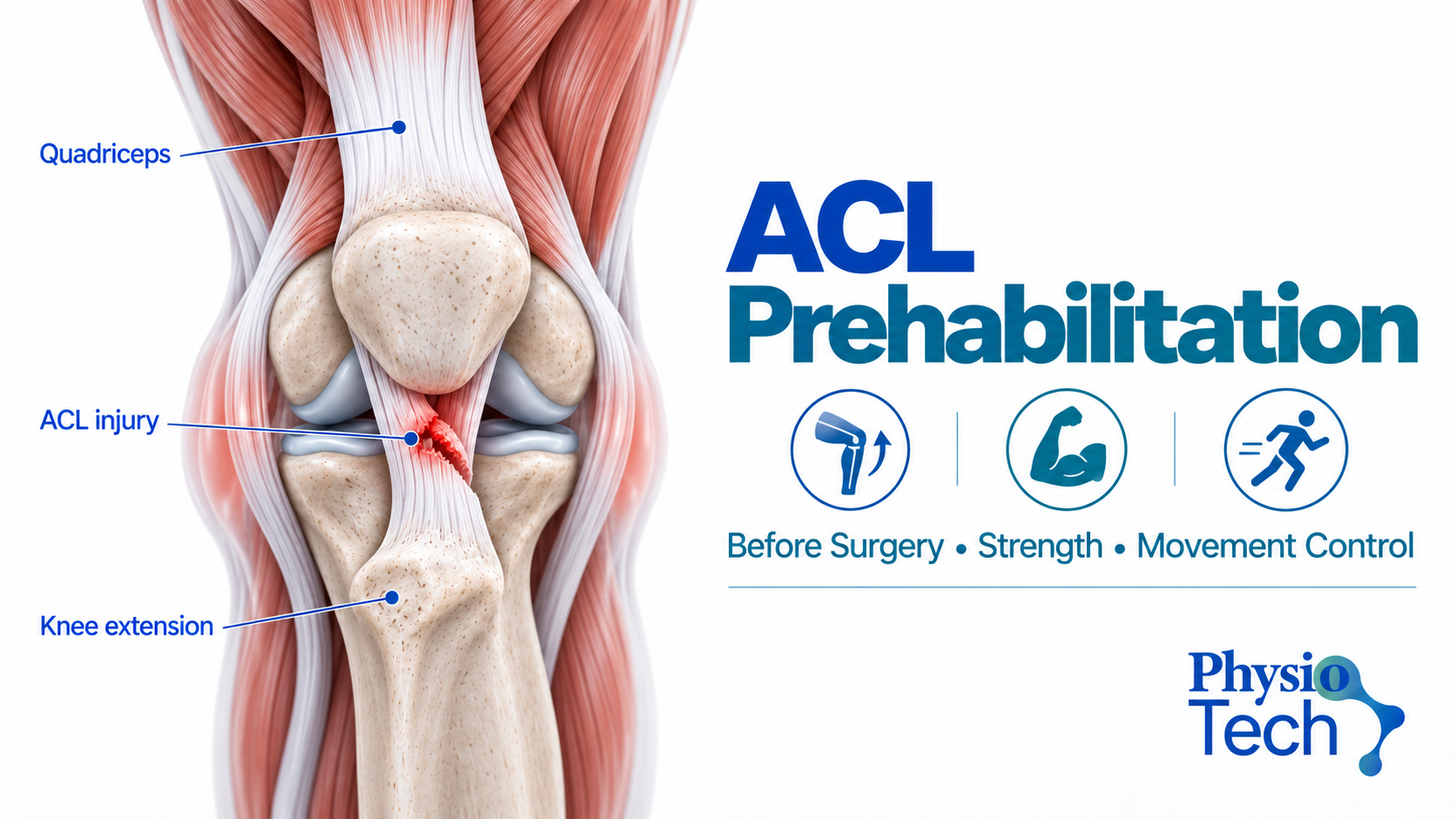
اقرأ المقال بالعربيةACL prehabilitation is structured rehabilitation after injury and before reconstruction when surgery is chosen. The aim is not to challenge an unstable knee. It is to arrive at surgery with controlled swelling, useful motion, better strength and a clear understanding of postoperative stages.
## Why calm the knee first?
Marked swelling, loss of knee extension and poor quadriceps activation can make early recovery harder. The team therefore prioritises effusion control, full or near-full extension, progressive flexion and improved quadriceps function.
## Main goals
1. Reduce pain and swelling.
2. Restore extension and improve gait.
3. Recover flexion gradually.
4. Strengthen quadriceps, hamstrings, calf and hip.
5. Maintain safe general conditioning.
6. Practise crutches or bracing if required.
7. Learn immediate postoperative exercises and expectations.
## Programme content
After assessing stability and associated injuries, care may include mobility drills, quadriceps activation, straight-leg raise, calf and hip exercise, stationary cycling when motion permits, and balance work. Strength progresses from low load to meaningful resistance without increasing swelling or giving way.
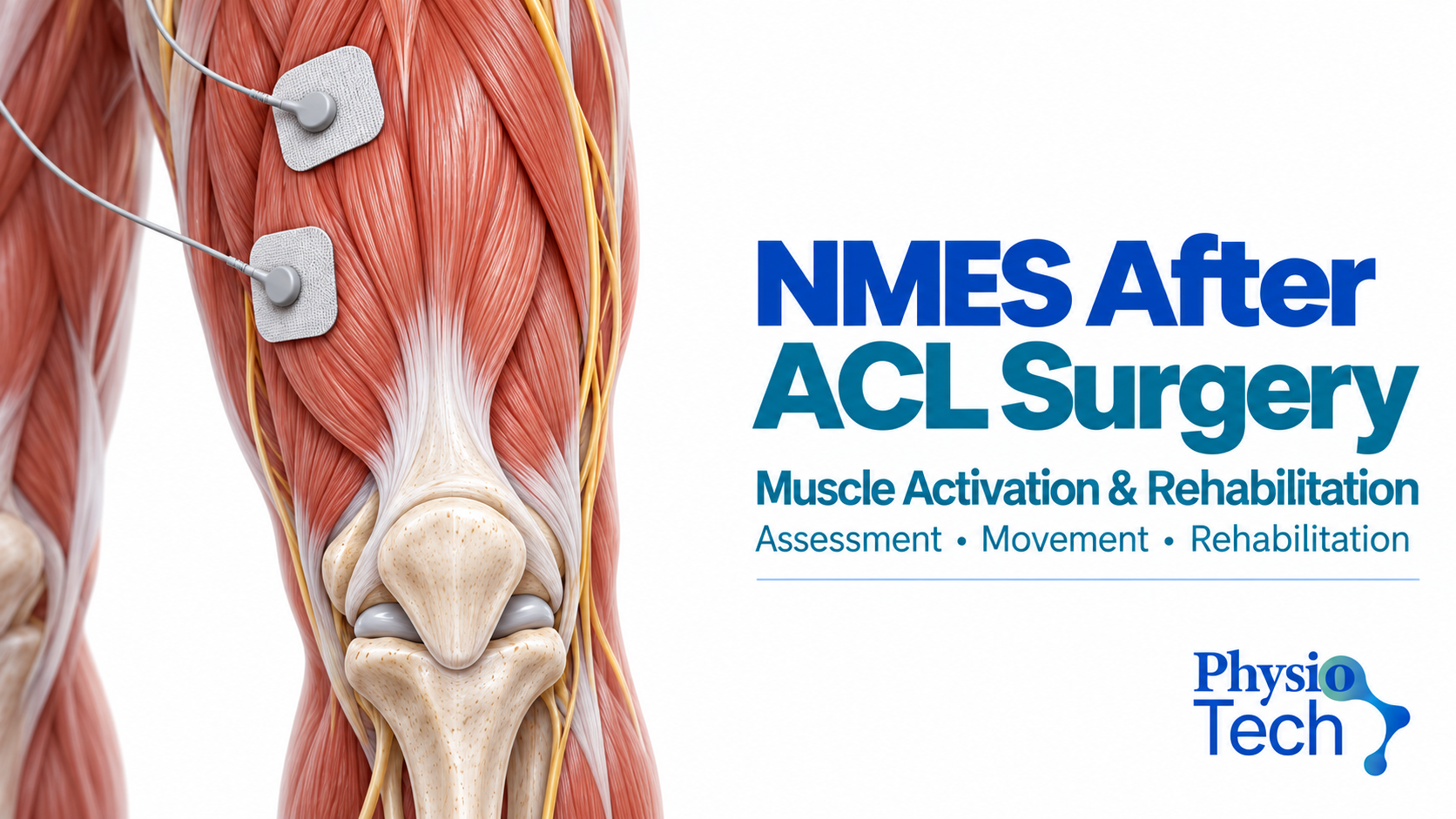
Electrical stimulation may support quadriceps activation in selected cases, while manual therapy may assist movement. Exercise and graded load remain the foundation.
## Does every ACL tear need surgery?
No. The decision depends on functional age, sport, instability episodes, associated injury and goals. Some people do well with structured non-operative rehabilitation; others choose reconstruction for pivoting sport. It is a shared decision with the patient, surgeon and rehabilitation team.
## Avoid
Do not force painful swelling, pivot or jump before readiness, neglect knee extension, use time alone as a strength measure, or stop all activity without a reason.
## Readiness at PhysioTech
We monitor swelling, extension and flexion, gait, quadriceps function, single-leg control and the patient's ability to follow a home plan. Surgeon instructions, graft choice and associated meniscal or cartilage procedures are considered.
After surgery, rehabilitation follows tissue status and the surgeon's protocol. Preoperative education helps the patient manage swelling, restore safe movement and activate the quadriceps early.
> Timing and exercise selection are individual medical decisions.