Share:
112 views
#الصداع العنقي #صداع الرقبة #ألم خلف الرأس #Cervicogenic Headache #علاج طبيعي للرقبة
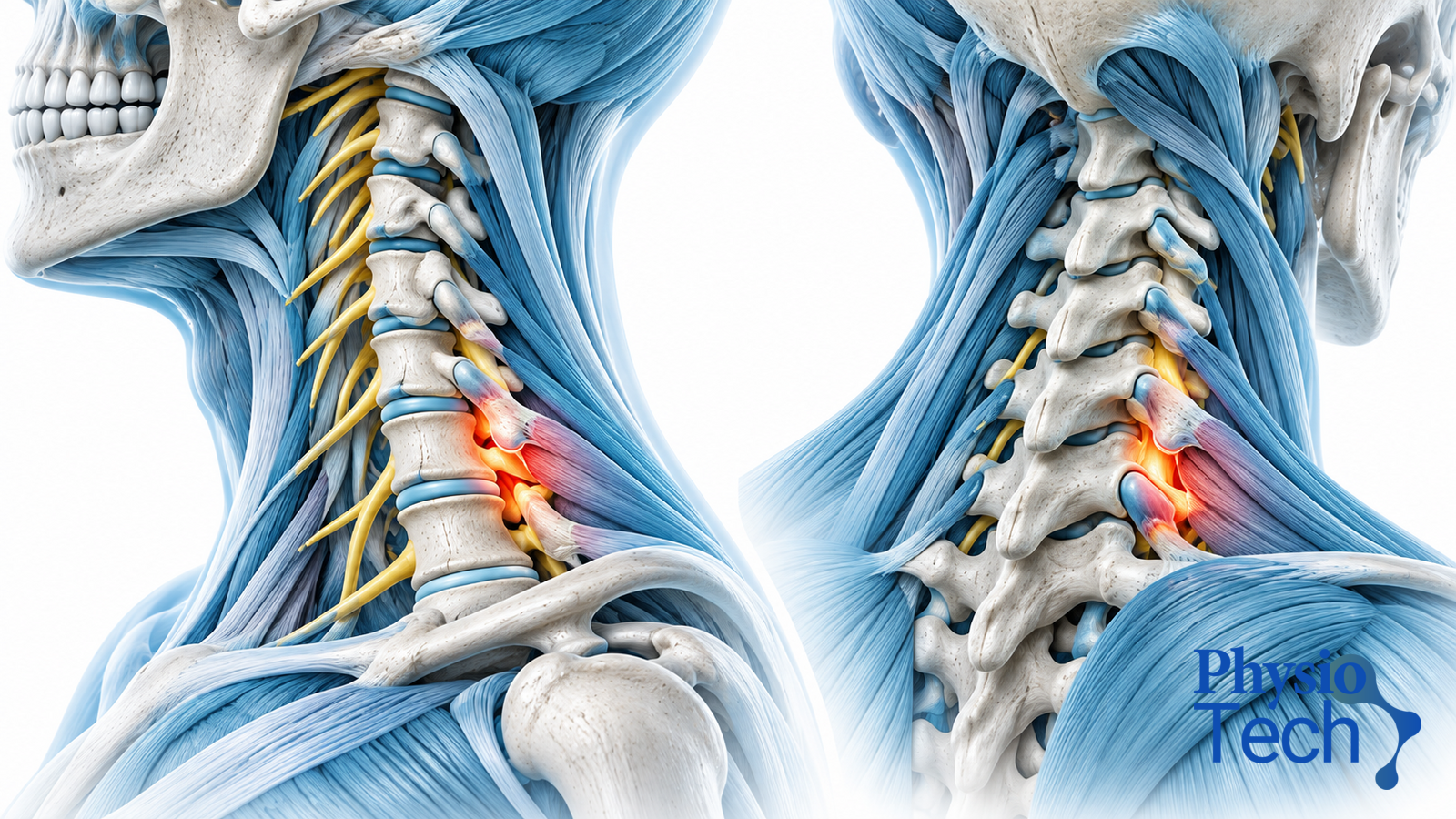
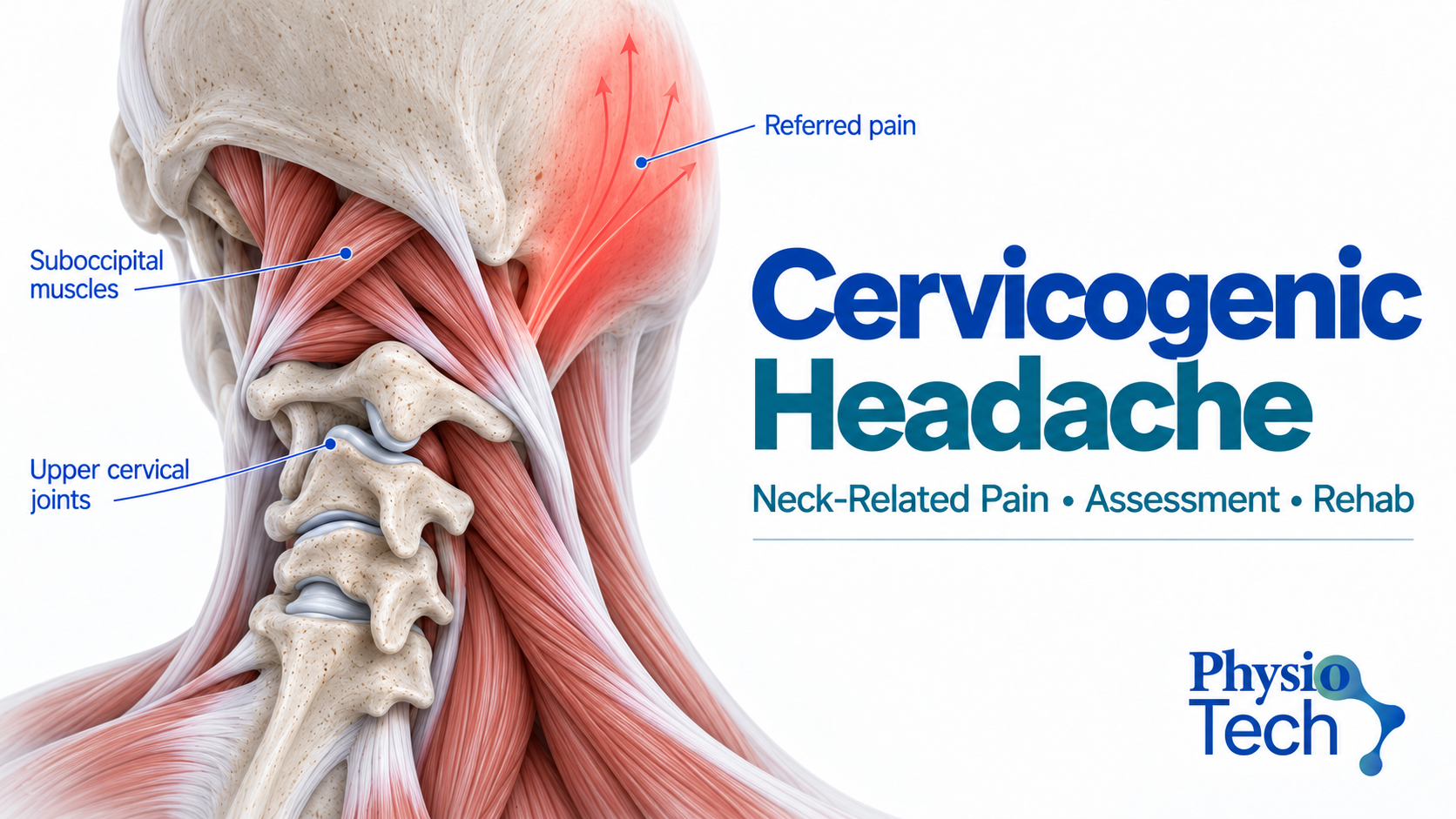
Cervicogenic headache is felt in the head but is linked to structures in the neck, particularly the upper cervical region. It may start at the back of the head and travel to one side or behind an eye. It can overlap with migraine or tension-type headache, so careful assessment is essential.
Features that may suggest a neck source
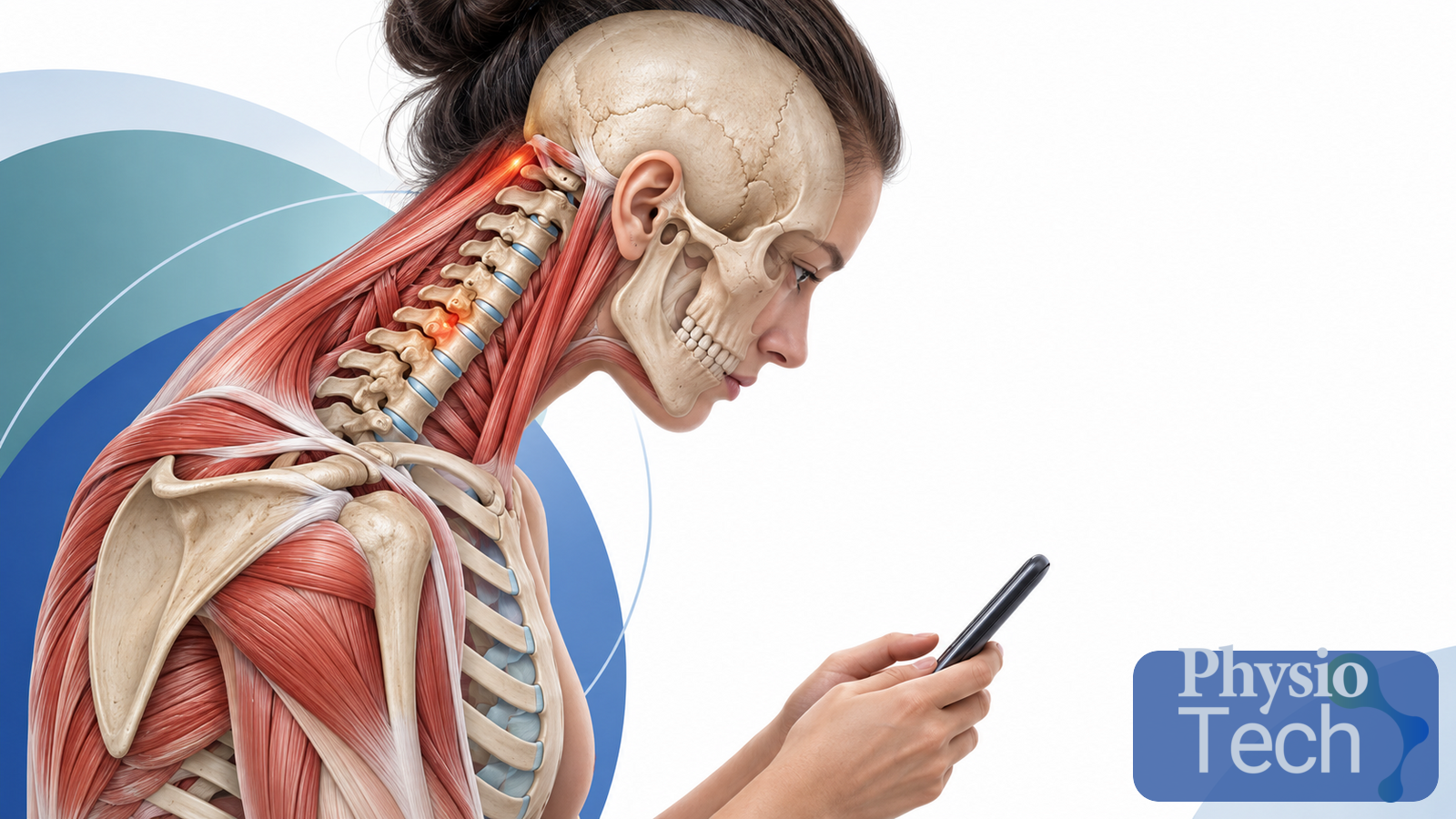
Headache related to neck movement or sustained posture, reduced neck motion, upper-neck pain or stiffness, repeated one-sided symptoms, and reproduction during examination may support the diagnosis. No single finding is enough, and more than one headache type can coexist.
Difference from migraine
Migraine may include nausea, marked light or sound sensitivity and throbbing symptoms, while cervicogenic headache is often linked more closely to neck movement and restriction. Overlap is possible, and new or unusual headache needs medical consideration.
PhysioTech assessment
We review frequency, duration, triggers and associated symptoms, then examine cervical movement, posture tolerance, muscle control, the thoracic region and shoulder blades. Sleep, work habits and physical activity are considered.
Physiotherapy
Care may include education and workstation changes, graded neck and thoracic mobility, deep neck muscle endurance, shoulder-blade strengthening, short-term manual therapy when appropriate, and gradual return to activity with a home plan.
Dry needling may help selected associated muscular trigger points after safety screening, but it is not a treatment for every headache. Passive modalities do not replace exercise and trigger management.
Measuring improvement
Progress is tracked through headache days, intensity, medication use, neck movement and work tolerance. A diary shows trends more reliably than one good or bad day.
Urgent red flags
Seek urgent help for sudden maximal headache, headache after major trauma, weakness, speech or vision change, loss of consciousness, fever with marked stiffness, a new headache during pregnancy or postpartum, or a major change in an established pattern.
PhysioTech does not assume every headache comes from the neck. Safe screening comes first.
Note: Educational information only; it does not replace medical evaluation.