Share:
71 views
#الفقرات العصعصية #العصعص #ألم الجلوس #Coccyx #علاج طبيعي #المعادي
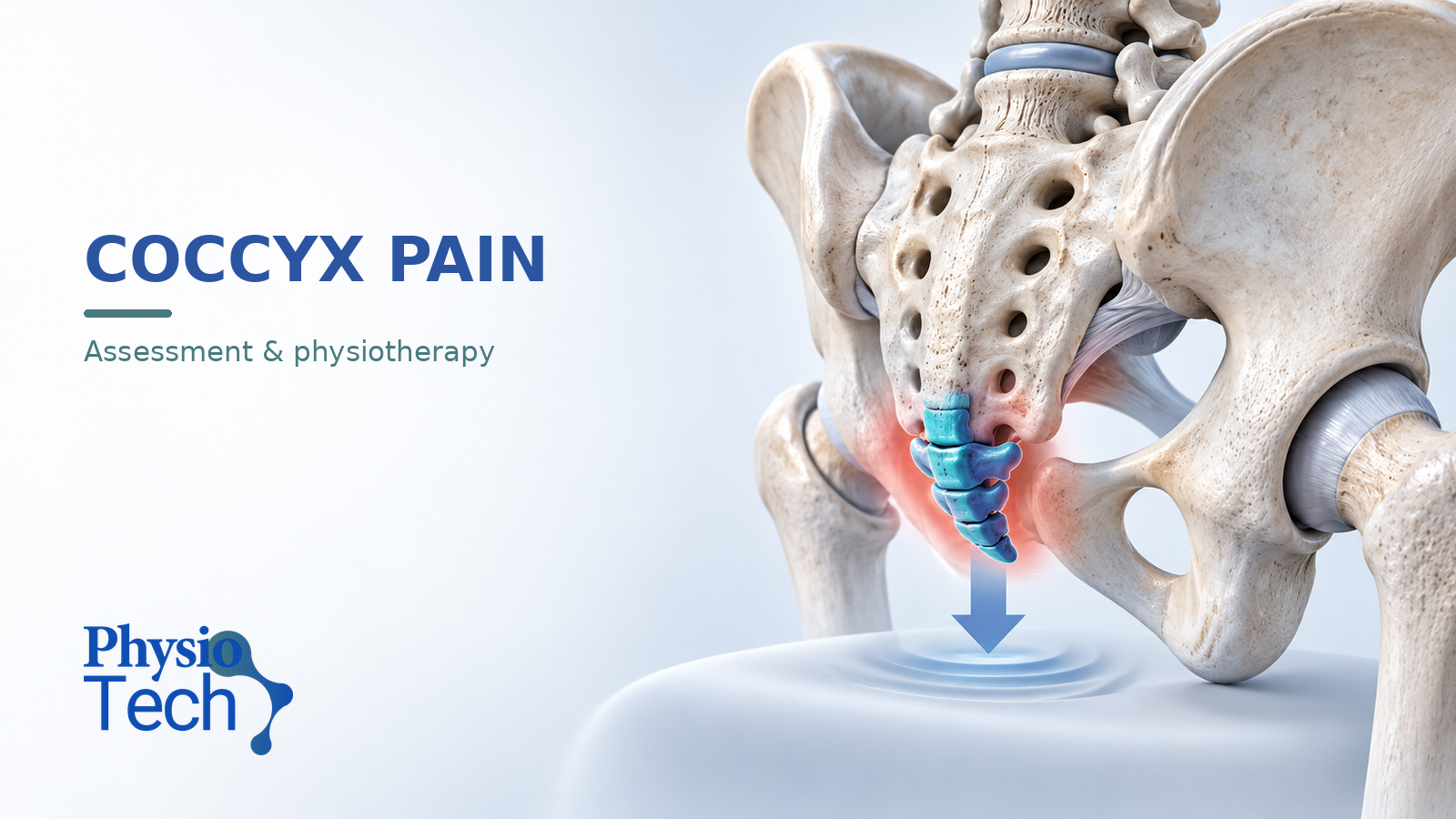
Coccyx or tailbone pain is soreness and tenderness at the base of the spine near the top of the buttocks. It often worsens with prolonged sitting or when moving from sitting to standing. Symptoms may start after a direct fall, extended sitting, childbirth, or without a clear event. Identifying the factors that increase pressure on the area guides management.
اقرأ المقال بالعربيةCommon symptoms
The pain may be dull most of the time with occasional sharp episodes. Hard seats, leaning backward, driving, standing up from a chair, bending, or bowel movements may aggravate it. Symptom duration alone does not prove a fracture or serious disorder.
Possible causes
Common contributors include a fall onto the buttocks, sports trauma, prolonged sitting, changes in activity, pregnancy or childbirth, and sensitivity of surrounding tissues. Hip, lower-back, pelvic, or pelvic-floor factors may also influence symptoms, so pressing on the painful spot is not a complete assessment.
When to seek medical care
Arrange medical assessment after major trauma or with fever, swelling, discharge, unexplained weight loss, progressive night pain, leg weakness or numbness, or changes in bladder or bowel control. Pain that persists for several weeks despite sitting modifications also deserves review.
Clinical assessment
We review symptom onset, sitting habits, daily activities, and aggravating positions, then examine lower-back, hip, and pelvic movement, muscle capacity, and the response to changing posture. Findings that do not fit a straightforward mechanical presentation prompt appropriate referral or further investigation.
Physiotherapy for coccyx pain
Management may include pressure-relieving sitting strategies, a coccyx-cutout cushion when appropriate, shorter sitting periods, and improving hip, pelvic, and lower-back movement. Breathing, motor-control, and progressive strengthening exercises are selected from the examination. Manual treatment is reserved for suitable cases with consent and is not required for everyone.
What you can try now
Change position regularly, avoid uninterrupted sitting, and try a slight forward lean with the feet supported rather than resting directly on the tailbone. Heat or cold may help according to personal response. Avoid aggressive unsupervised exercise when pain began after a recent fall or is rapidly worsening.
Book an assessment at PhysioTech
If coccyx pain makes sitting, driving, or work difficult, book an assessment at PhysioTech Clinic in Zahraa El Maadi. We identify contributing factors and build a gradual plan to restore comfortable sitting and movement.
Medical source
This article draws on NHS guidance for tailbone pain. It is educational and does not replace medical evaluation when warning signs are present.