Share:
46 views
#التهاب غضاريف القفص الصدري #Costochondritis and Chest Wall Pain #علاج طبيعي #physiotherapy #Cairo
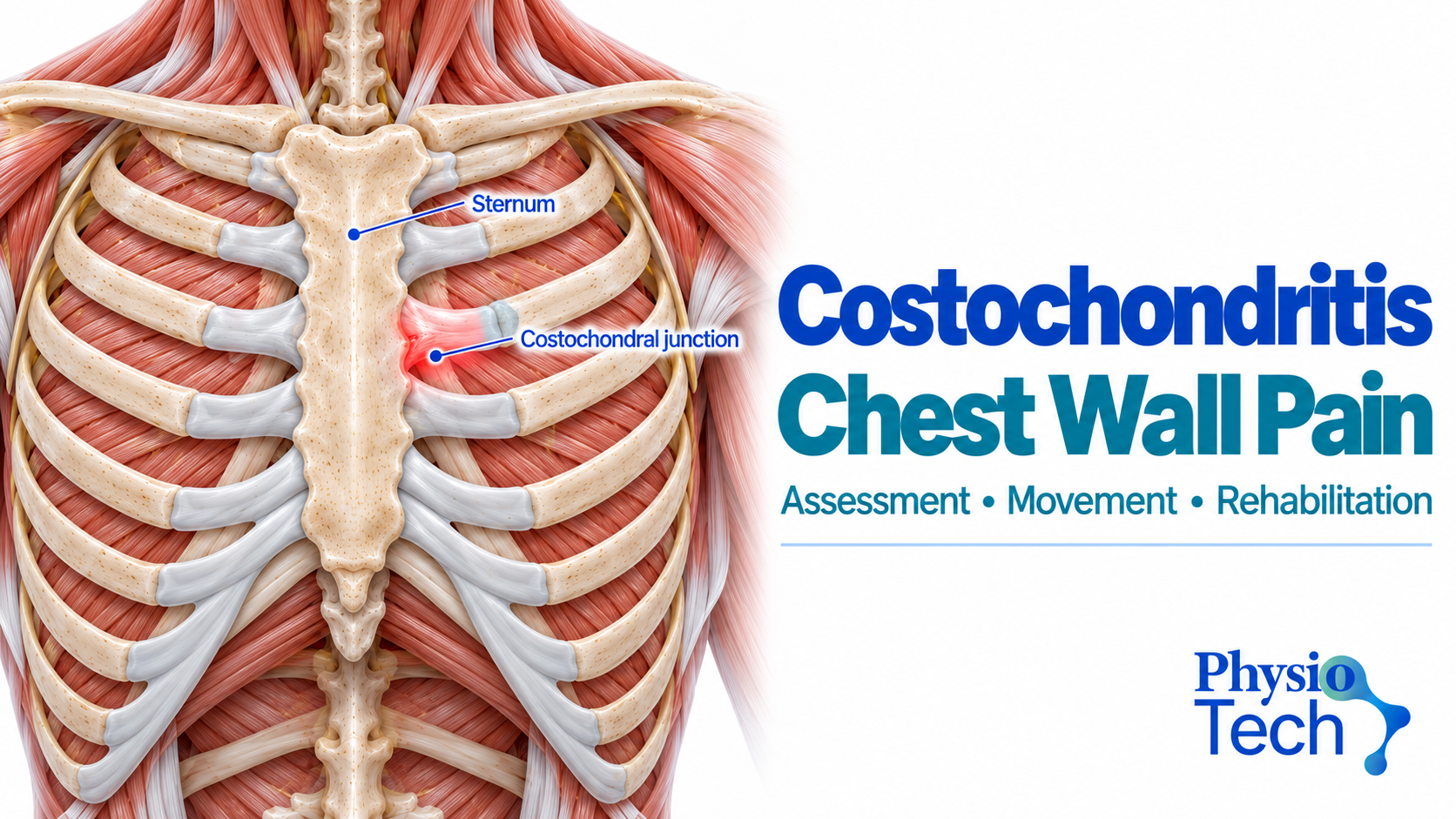
Pain beside the breastbone that changes with upper-body movement, deep breathing or local pressure may come from the chest wall and is often called costochondritis. Chest pain must not be self-diagnosed because cardiac, respiratory and other causes need to be considered according to symptoms and risk.
اقرأ المقال بالعربيةAt PhysioTech Clinic in Zahraa El Maadi, Cairo, treatment begins with the person’s symptoms, examination and goals rather than a technique selected from a label alone. This article explains the condition but cannot replace an individual assessment or urgent care when warning signs are present.
What Is Happening Anatomically?
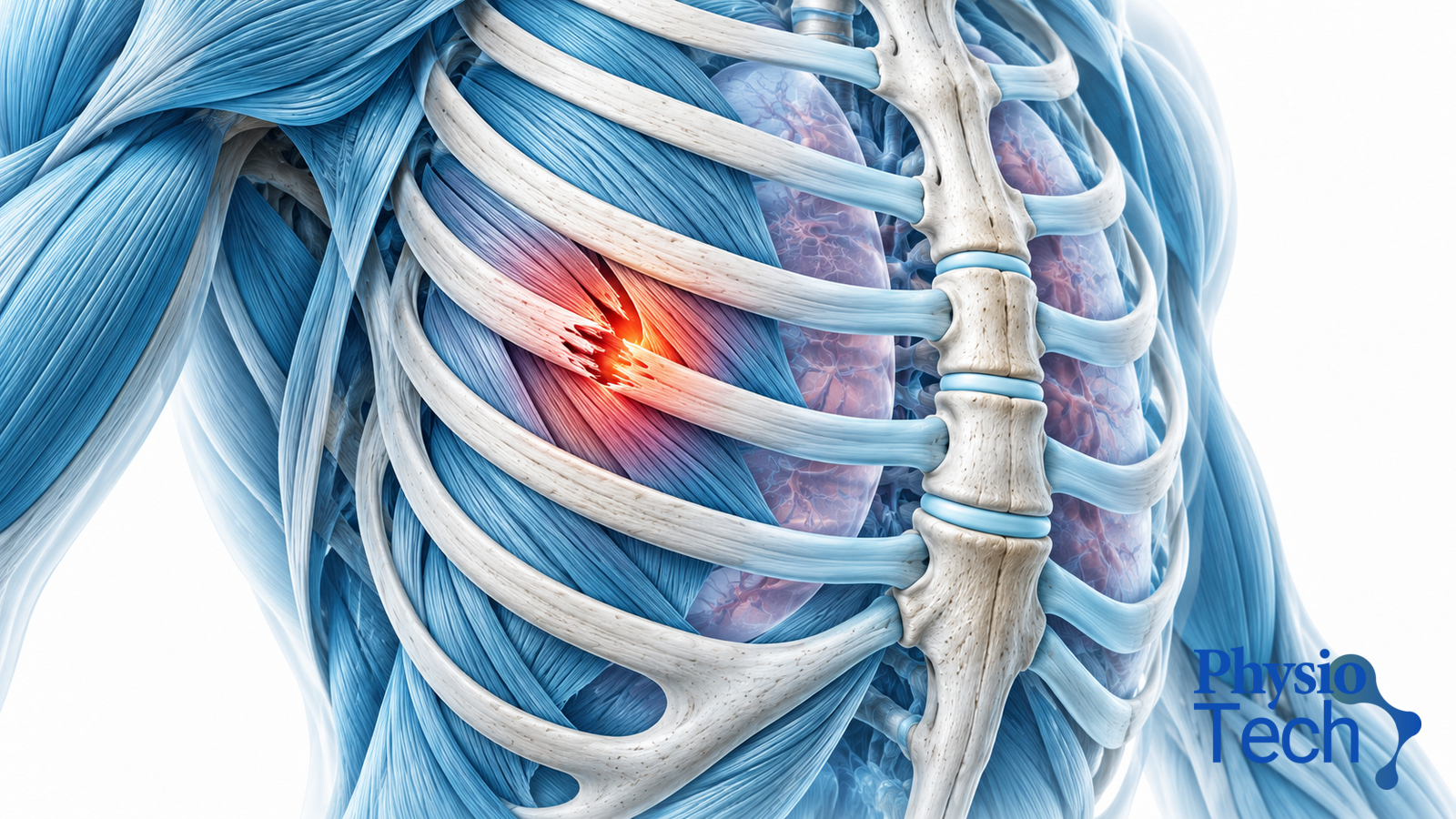
Ribs connect to the sternum through cartilage that allows the chest to move with breathing. Irritation may follow coughing or repeated activity, or appear without a clear trigger. Reproducible tenderness can support a chest-wall source but does not independently exclude internal disease.
Symptoms You May Notice
Local anterior chest pain may increase with twisting, arm movement or deep inspiration and is often tender to touch. Visible swelling at a single junction may represent a different presentation and deserves medical evaluation.
How Is It Assessed?
We first clarify pain quality, duration, exertional and breathing relationship, associated symptoms and risk factors. After urgent medical causes have been excluded, examination can assess thoracic, rib and shoulder movement, breathing and provocative tasks.
PhysioTech does not base a diagnosis on one scan or one provocative test. We connect the history with symptom distribution, daily behaviour, movement, strength and the tasks that matter to the patient. The working explanation is tested by changing a relevant load or treatment variable and measuring the response. If the findings do not fit, the diagnosis is reconsidered and the examination or referral pathway is expanded. This keeps care focused on measurable function rather than a label alone.
What Else Could It Be?
Cardiac and pulmonary disease, reflux, traumatic injury, shingles and muscular or spinal referral can mimic chest-wall pain. An article or simple palpation test cannot rule out serious conditions.
Physiotherapy at PhysioTech
First Phase: Settle Provocative Load
When medical and clinical assessment supports a musculoskeletal source, provocative movement is temporarily modified before graded breathing, thoracic and shoulder mobility and progressive pushing, pulling and work tasks. Manual therapy may reduce sensitivity for some people but remains an adjunct to movement and return to activity.
Next Phase: Build Capacity
As symptoms settle, therapeutic exercise and graded loading are matched to your response and goals. Manual or symptom-relief techniques may be adjuncts when useful, but they do not replace exercise and repeated assessment. Recovery timelines vary with severity, health and activity demands.
A key part of the plan is understanding why each exercise was chosen and how to adjust its dose. We agree on an acceptable symptom response during activity, review what happens later and the next day, and then progress repetitions, resistance, speed or task complexity. The aim is not to make a session feel hard; it is to improve capacity for work, walking and sport without an escalating flare. Sleep, workload distribution, general health and confidence in movement are considered alongside local tissue loading.
Progression and Return to Activity
How Do We Measure Progress?
Deep-breathing tolerance, sleep, movement and return to work or exercise are monitored. A change in the nature of pain or new systemic symptoms prompts reassessment.
What Can You Do at Home?
Avoid repeatedly pressing the area to test it. Temporarily reduce severely provocative tasks while maintaining comfortable movement. Do not use exercise to delay assessment of new chest pain.
When Is Medical Review Needed?
Pressure-like pain, radiation to the arm or jaw, shortness of breath, sweating, dizziness, fainting, new palpitations, coughing blood or sudden severe chest pain needs emergency assessment.
Frequently Asked Questions
Does tenderness prove the pain is not cardiac?
No. It may support a chest-wall source but cannot exclude every serious cause.
Is costochondritis dangerous?
Musculoskeletal chest pain is often manageable, but assessment begins by excluding urgent conditions.
Can exercise help?
After appropriate assessment, movement and loading can be graded to symptoms.
Book an Assessment in Cairo
If Costochondritis and Chest Wall Pain affects work, walking or sport, book an individual assessment at PhysioTech in Zahraa El Maadi, Cairo. We explain the findings clearly, decide whether physiotherapy is appropriate or medical referral is needed, and agree on measurable rehabilitation goals.