Share:
90 views
#الانزلاق الغضروفي #ضيق القناة العصبية #عرق النسا #ألم أسفل الظهر #العلاج الطبيعي
# Disc Herniation vs Spinal Stenosis vs Sciatica
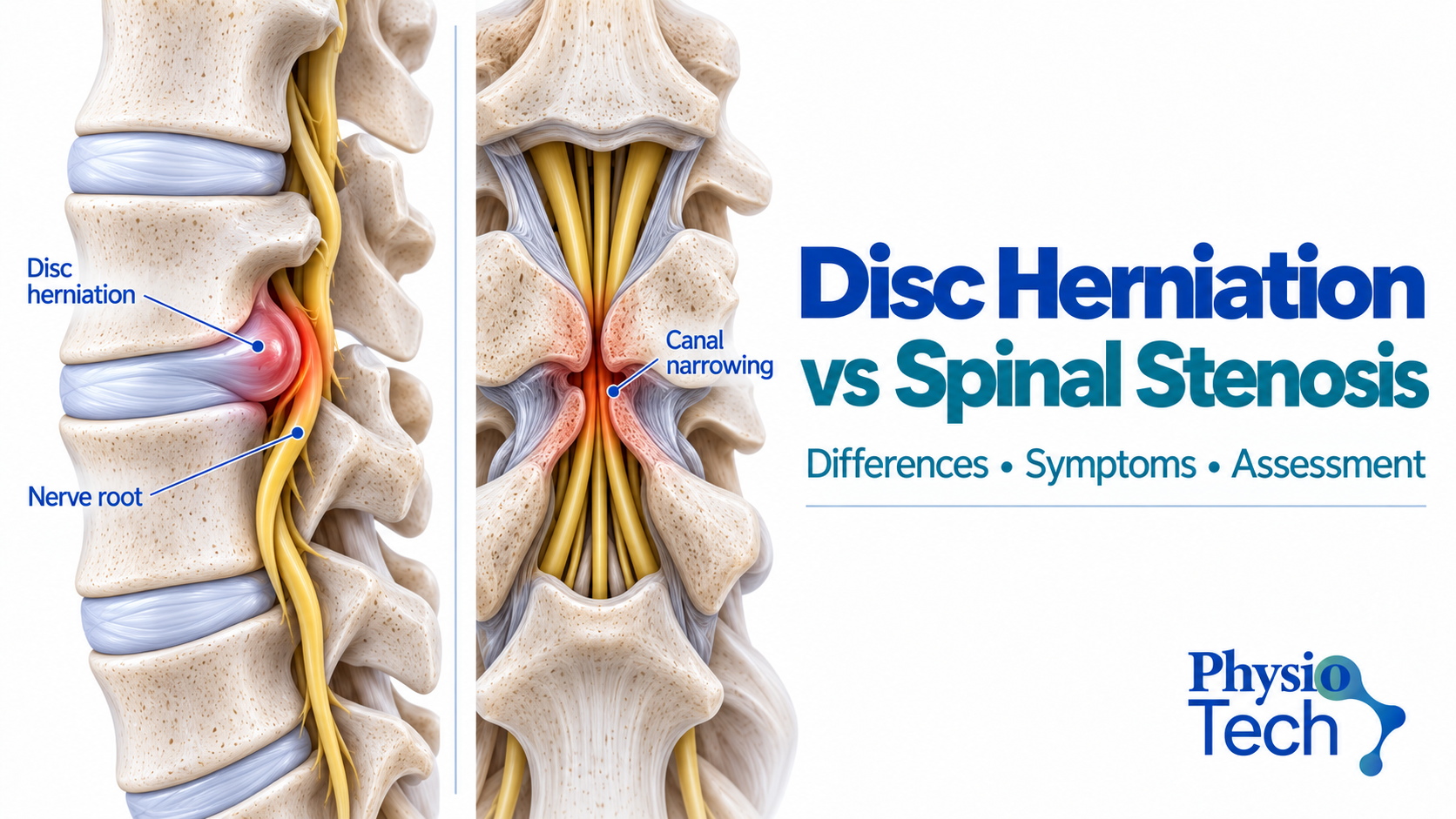
اقرأ المقال بالعربيةThese terms are related but not identical. A **disc herniation** is a change in an intervertebral disc; **spinal stenosis** means reduced space around neural structures; and **sciatica** is a pattern of symptoms travelling from the lower back or buttock into the leg. They may occur separately or overlap, so neither a label nor an MRI should determine treatment in isolation.
## Lumbar disc herniation
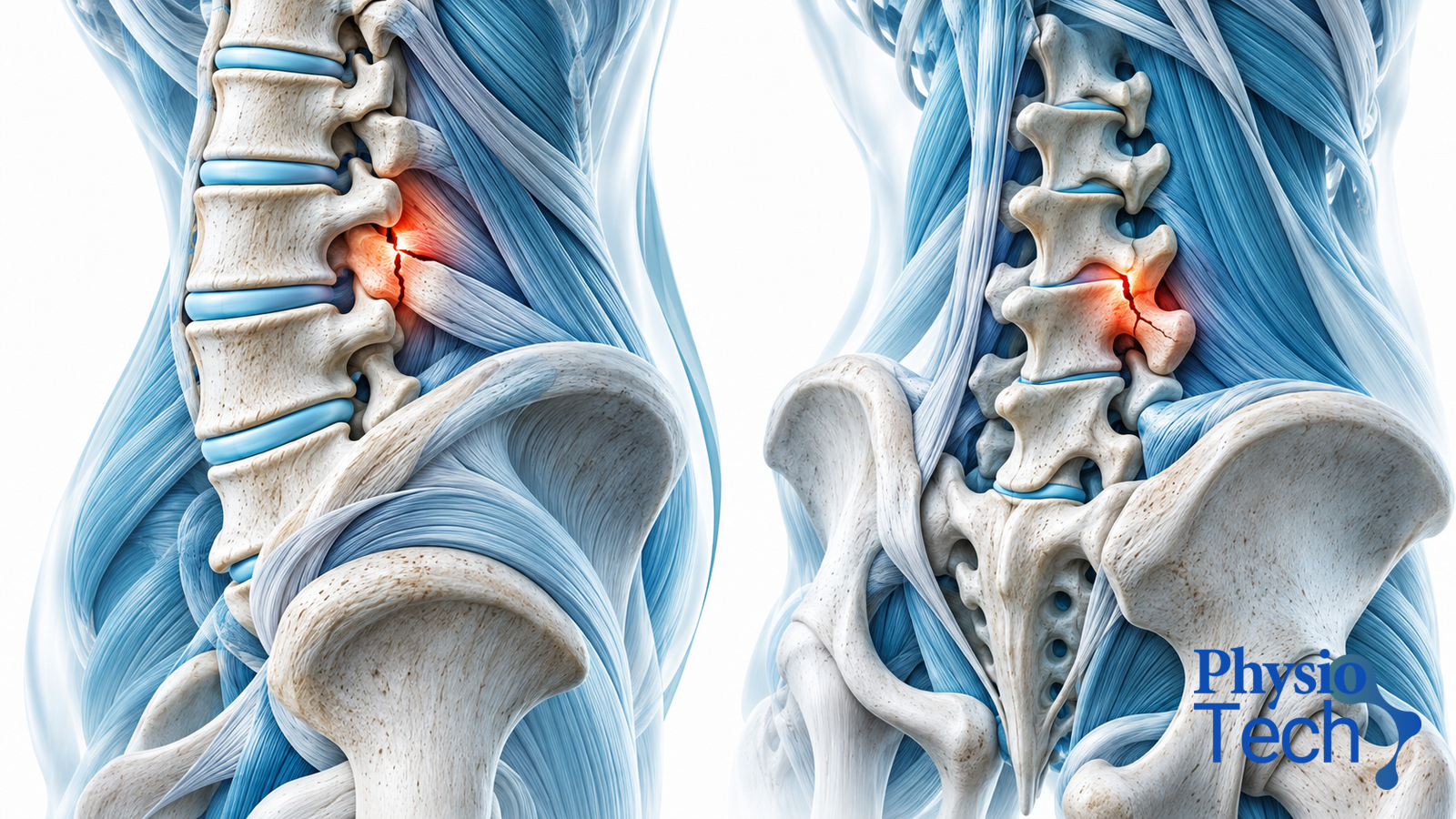
Disc material may bulge or herniate and sometimes irritate a nearby nerve root. Many disc changes are painless; others matter when they match symptoms and neurological findings. Possible features include back or leg pain, pins and needles, altered sensation or weakness. Symptoms may change with sitting, bending or coughing.
## Lumbar spinal stenosis
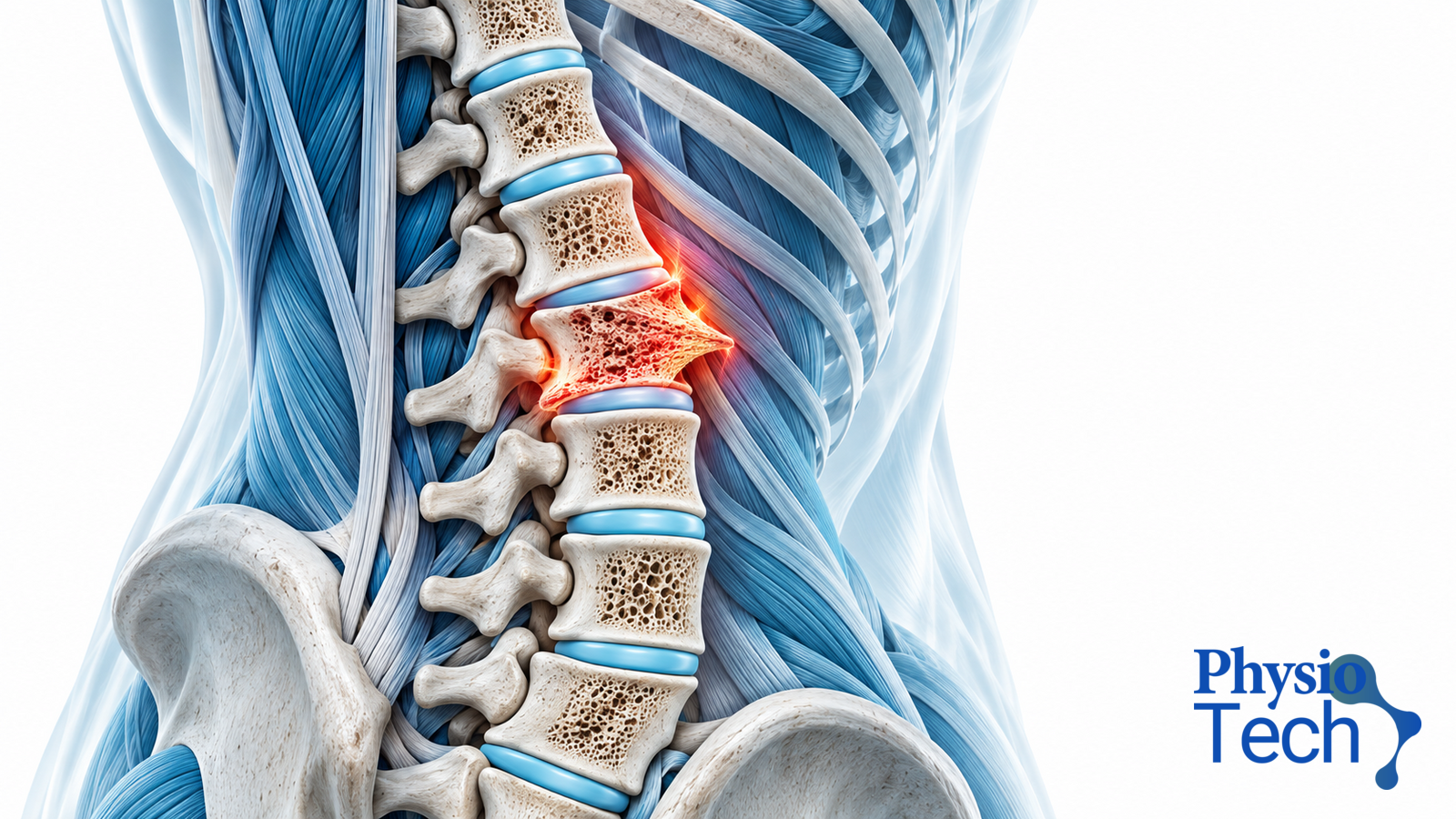
Stenosis may be related to changes in joints, ligaments and discs. A common presentation is leg pain, heaviness or numbness during standing or walking that eases with sitting or bending forward, often called neurogenic claudication. Symptom severity does not always match the scan.
## Sciatica
Sciatica describes sharp, burning or electric pain, tingling or numbness along the sciatic distribution. A disc herniation or stenosis may cause it, but hip, peripheral nerve and other disorders can mimic it.
## Assessment at PhysioTech
Our physiotherapists assess symptom behaviour, lumbar and hip movement, strength, sensation and reflexes, neural provocation tests, walking and sitting tolerance, and available imaging in the context of the examination. This helps distinguish nerve-root symptoms from muscular pain, hip pathology, vascular claudication and peripheral nerve problems.
## Physiotherapy management
A tailored programme may include education, load modification, direction-specific movement, trunk and hip strengthening, walking or conditioning work, and manual therapy when appropriate. Electrotherapy or therapeutic ultrasound may be used selectively for symptom relief, but active rehabilitation remains central.
The goal is to improve walking, sitting, sleep, work and confidence while providing a clear self-management plan.
## Seek urgent medical care when
Urgent assessment is required for new bladder or bowel dysfunction, saddle numbness, rapidly progressive weakness, major trauma, fever or unexplained weight loss.
## Is surgery always needed?
Many people improve with conservative care. Surgery may be considered with progressive neurological loss, an emergency syndrome, or disabling symptoms that persist despite appropriate management. PhysioTech monitors progress objectively and refers for medical review when indicated.
> Educational content only; it does not replace an individual diagnosis.