Share:
33 views
#PhysioTech #Cairo #evidence-based physiotherapy #Fracture Fixation
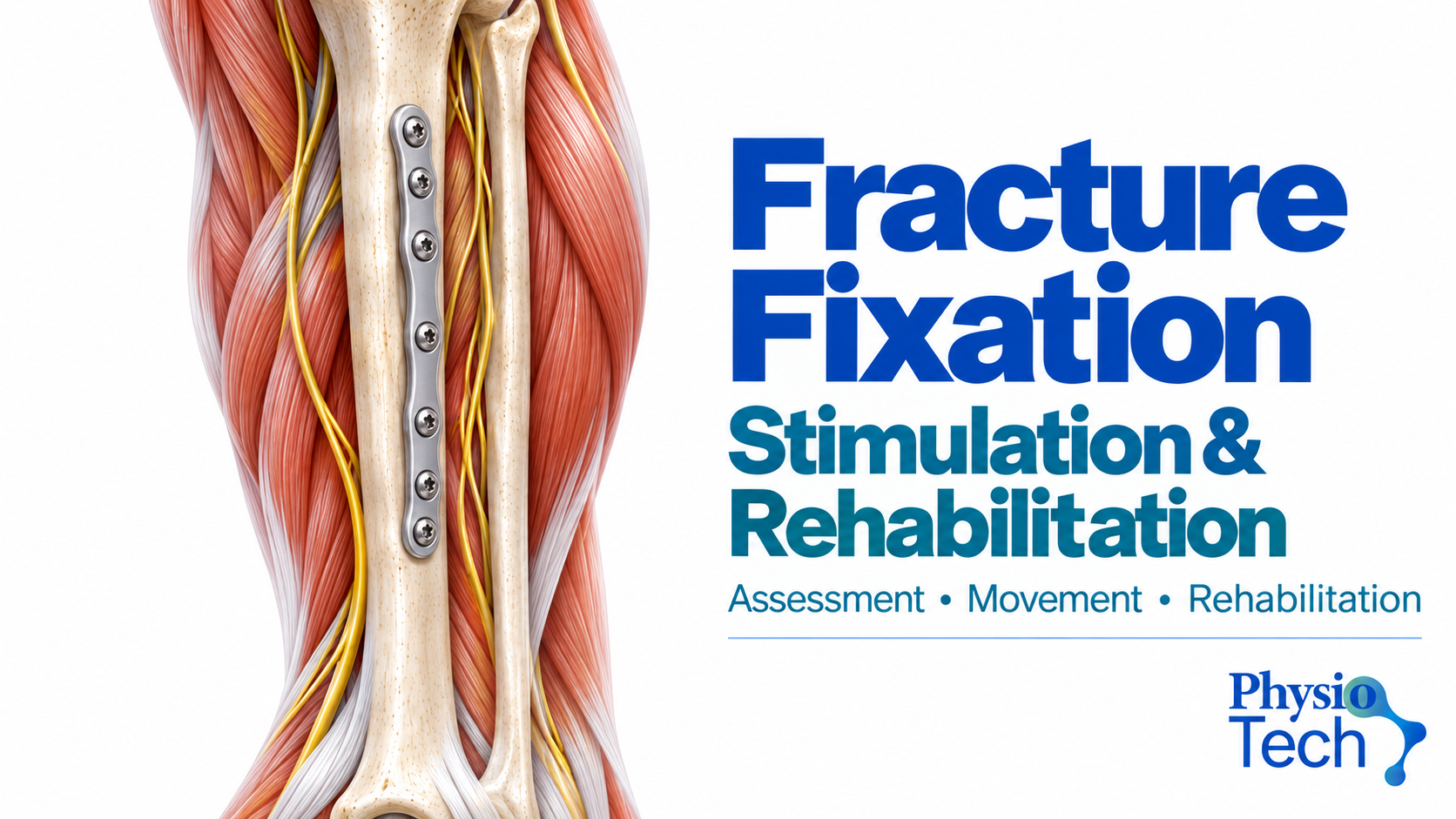
A plate or nail after fracture fixation often leads to two questions: is electrical treatment prohibited, and can it help the muscles? There is no single answer for every operation. Metal fixation differs from an implanted electronic device; sensory stimulation differs from stimulation that produces contraction; and muscle activation is not the same as bone stimulation. This article explains a decision-making framework, not permission to use a device after any fracture operation.
اقرأ المقال بالعربيةFirst identify the type of stimulation
Different goals are not interchangeable
TENS may target pain, NMES may target contraction, and a specialist may prescribe a separate bone-stimulation device for selected situations. Evidence for one purpose does not establish effectiveness for another. A generic electrical session should not be presented as treatment for every consequence of fracture fixation. Tingling on the skin does not demonstrate improved muscle strength.
Do plates and screws prohibit stimulation?
Metal fixation is not a pacemaker
Electrophysical-agent precautions distinguish metal fixation from electronic implants. Metal alone is not a blanket prohibition on all surface stimulation. This does not make every application appropriate: contraction forces, fracture stability and repaired tissues require review. The same conclusion should not be extended automatically to deep-heating or shortwave treatments.
Why not copy an ACL programme?
The surgery and tissues are different
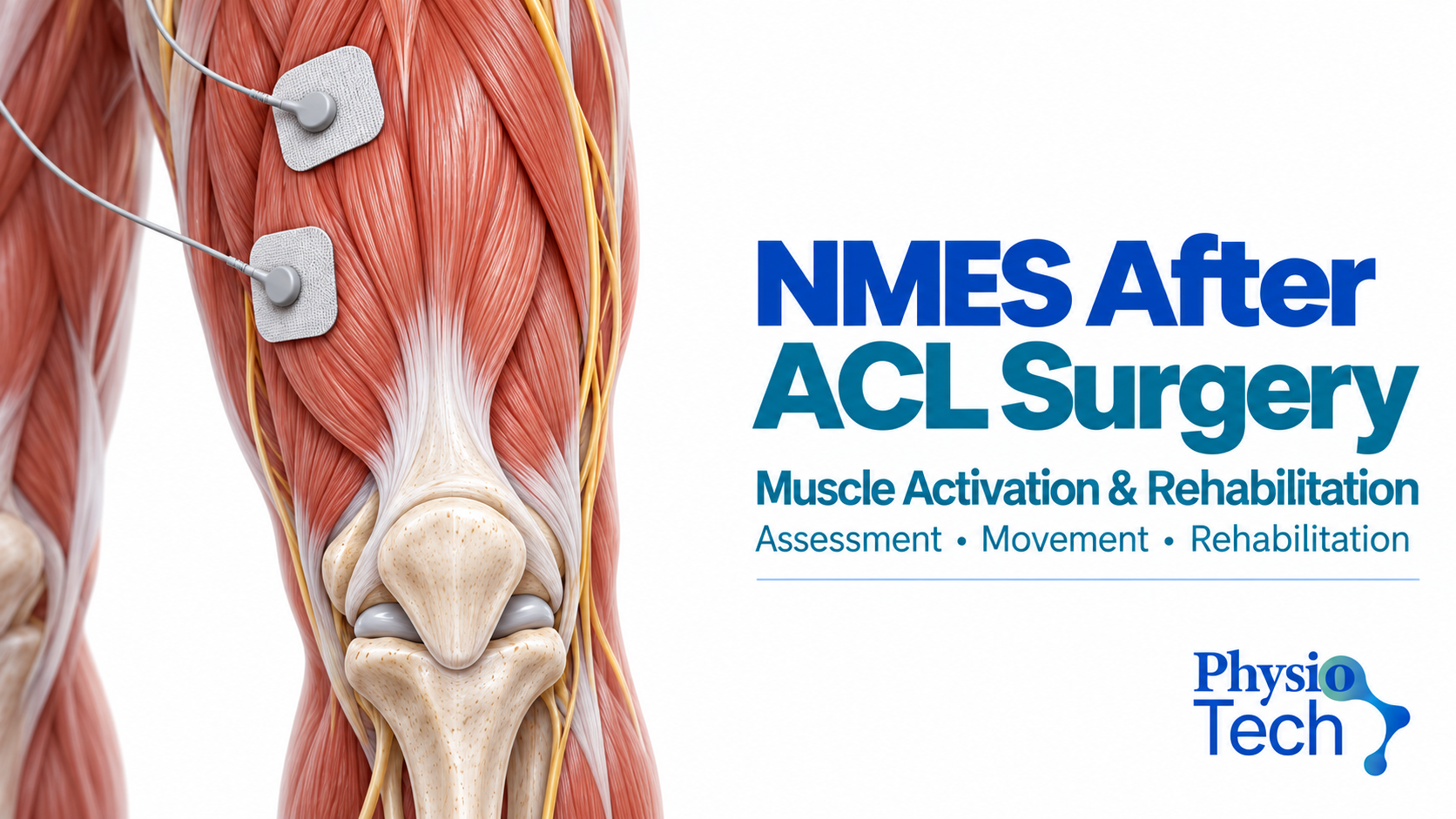
Fixation may involve the leg, shoulder or wrist, sometimes with additional tendon or nerve repair. Weight-bearing and movement restrictions differ, as does the force a contraction transmits to the surgical site. ACL evidence does not automatically create the same recommendation for every fracture. A specific rationale and appropriate precautions are needed instead of a universal postoperative prescription.
What is checked before treatment?
Surgical clearance and function
The operative report, follow-up findings, loading restrictions, wound, sensation, pain and voluntary contraction are relevant. Unclear restrictions or concerns about stability call for communication with the surgeon. Stimulation must not be used to bypass a loading limit or attempt a prohibited movement. Without a defined activation deficit or measurable goal, a device may not be a priority.
Rehabilitation extends beyond electrodes
Gradual recovery of capacity
At PhysioTech in Cairo, rehabilitation is organised around the fracture and operation: permitted movement, swelling management, control, then strength and daily tasks as healing progresses. An adjunct may be included when appropriate, but walking, hand use and lifting require actual task practice. We review safe capability, changes since assessment and any adjustments that need discussion with the surgeon.
Signs that need more than additional sessions
Wounds, clot symptoms and neurological changes
Unusually increasing pain, discharge or spreading wound redness, fever, new sensory loss, or a cold discoloured limb needs medical evaluation. After lower-limb operations, painful calf swelling or breathlessness deserves urgent attention. Do not mask a developing problem with electrical or heat treatment; timely medical contact matters more than completing a session.
Frequently asked questions
Does it accelerate healing of every fracture?
That cannot be claimed for muscle stimulators. Bone stimulation is a different specialist-selected intervention and does not replace follow-up or required imaging.
Should the first contraction be strong?
Appropriate force depends on safety, tolerance and surgical stage, not competition. Do not start treatment or increase settings without professional guidance.
Should I bring my imaging?
Bring the operative report, surgeon’s restrictions and available follow-up imaging. They help prevent exercise or contractions that conflict with your restrictions.
Assessment and treatment planning in Cairo
If this issue affects movement or work, you can book an assessment at PhysioTech in Zahraa El Maadi, Cairo, Egypt. We discuss your goals and examination findings, explain the options and limitations of each intervention, and agree an appropriate review plan. An article cannot determine the required number of sessions or guarantee an outcome; individual assessment is necessary.