Share:
66 views
#ألم مفاصل الفقرات القطنية #Lumbar facet pain #ألم أسفل الظهر #علاج طبيعي
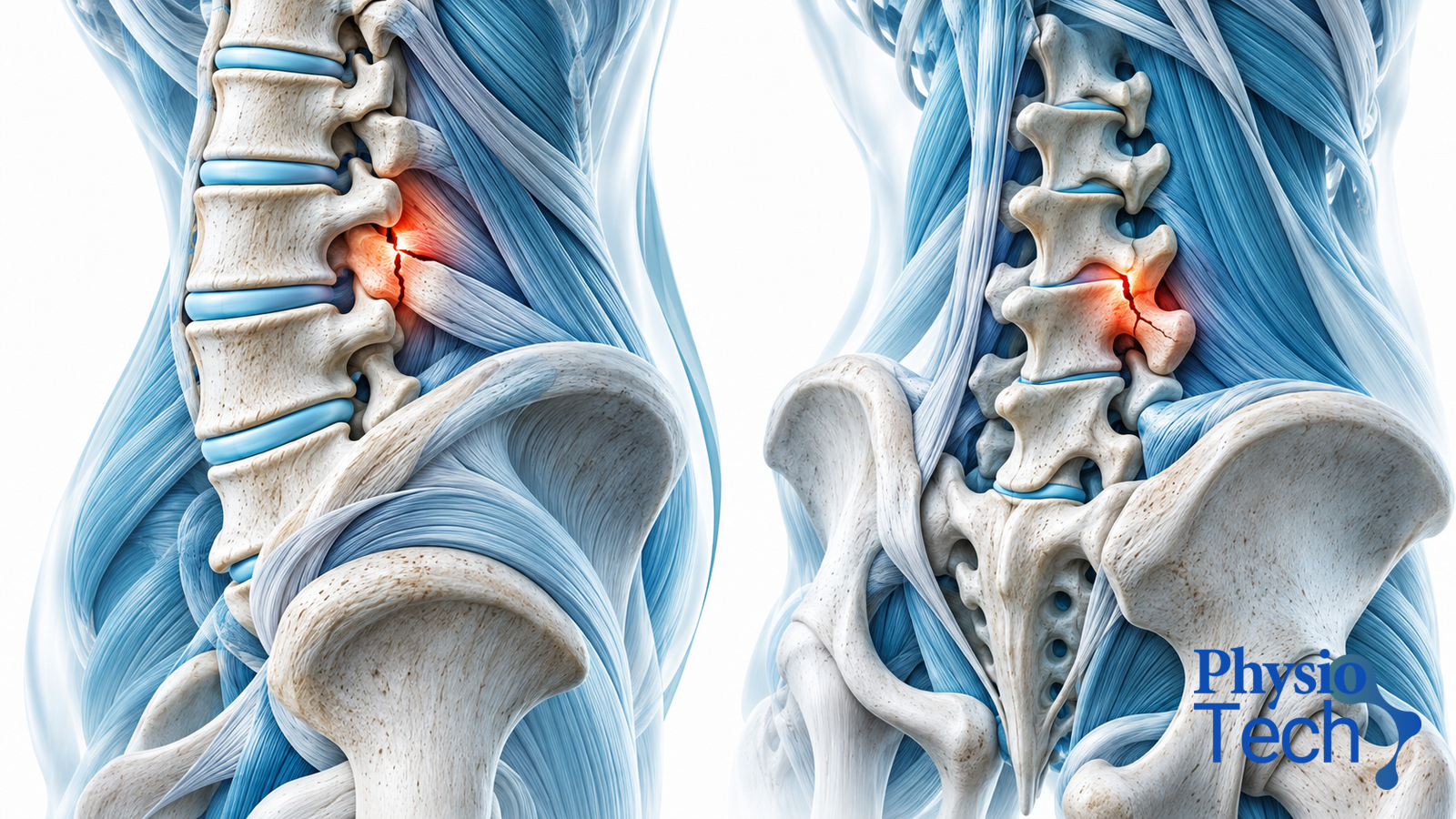
What Is Lumbar Facet Joint Pain?
Low-back pain that increases with prolonged standing or extension may involve the posterior facet joints, but it cannot be diagnosed from one movement or scan alone.
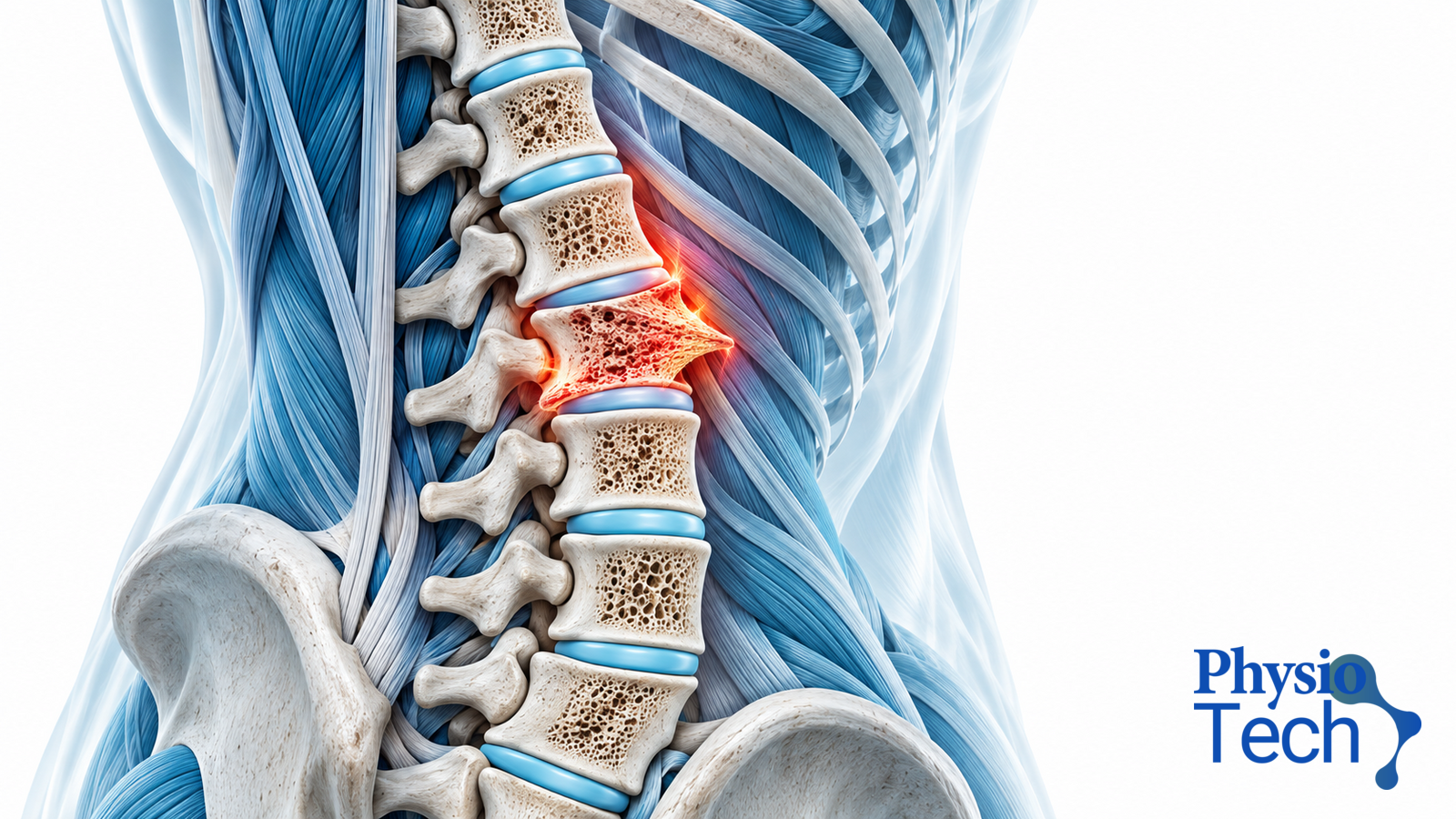
Facet joints are small posterior joints that guide spinal motion and share load. They may become sensitive after repeated loading, age-related change or a period of reduced capacity.
Facet degeneration on imaging does not prove the pain source. History, examination and movement response must fit together.
Common Symptoms
• Local or one-sided low-back pain.
• Symptoms with standing, extension or rotation.
• Stiffness after sustained posture.
• Pain may spread to the buttock without following a full nerve pattern.
Causes and Aggravating Factors
A sudden rise in standing or extension load, reduced trunk or hip capacity, repeated compression and degenerative change may contribute.
Conditions That Can Look Similar
Disc-related pain, lumbar stenosis, sacroiliac pain, hip disorders and local muscular pain.
How PhysioTech Assesses the Condition
We assess symptom behaviour, repeated movement, the hips, neurological status, strength and control, using a cluster of findings rather than one test.
Baseline Measures
Standing and walking tolerance, movement range, pain during a chosen task, trunk and hip capacity, and lifting quality.
When Imaging or Medical Referral May Be Needed
Progressive neurological symptoms, clear weakness, bowel or bladder change, fever, unexplained weight loss or major trauma needs medical review.
Lumbar Facet Joint Pain Treatment and Physiotherapy
1. Settle Symptoms and Manage Load
Temporarily adjust the most provocative position or activity while maintaining tolerable walking and movement.
2. Restore Movement and Control
Restore useful lumbar and hip movement and improve control in the directions that provoke symptoms.
3. Build Strength and Capacity
Build trunk and hip endurance, then graded carrying and lifting related to the patient’s tasks.
4. Return to Work or Sport
Increase standing, work and gym demands while learning to vary posture rather than chase one perfect position.
The PhysioTech Treatment Philosophy in Cairo
At PhysioTech Clinic in Zahraa El Maadi, Cairo, the plan is not built on an imaging label alone. We connect symptoms with movement, strength, capacity and the activities the patient wants to regain. Clear baseline measures are recorded and retested. Manual therapy or other adjuncts may be used for a defined purpose, but they never replace therapeutic exercise, graded loading and reassessment.
The goal is to improve back capacity and confidence, not create fear around common imaging changes.
Red Flags That Need Prompt Medical Review
Progressive bilateral numbness or weakness, saddle numbness, loss of control, fever or severe unrelenting night pain.
Frequently Asked Questions
Is extension permanently forbidden?
It may be reduced during a flare and then progressively restored according to response.
Can a scan confirm the pain source?
No. Common imaging changes must be interpreted with symptoms and examination.
Is exercise safe?
Yes when selection and progression match irritability and functional goals.
When Should You Book an Assessment?
Recurring pain with standing or extension deserves assessment to identify the pattern and build an appropriate plan. You can book an individual assessment at PhysioTech Clinic in Zahraa El Maadi, Cairo, to build a plan around your presentation and goals.