Share:
86 views
#ضيق القناة العصبية #ضيق القناة القطنية #العرج العصبي #ألم الساقين #علاج طبيعي للظهر
# Lumbar Spinal Stenosis: Symptoms and Physiotherapy
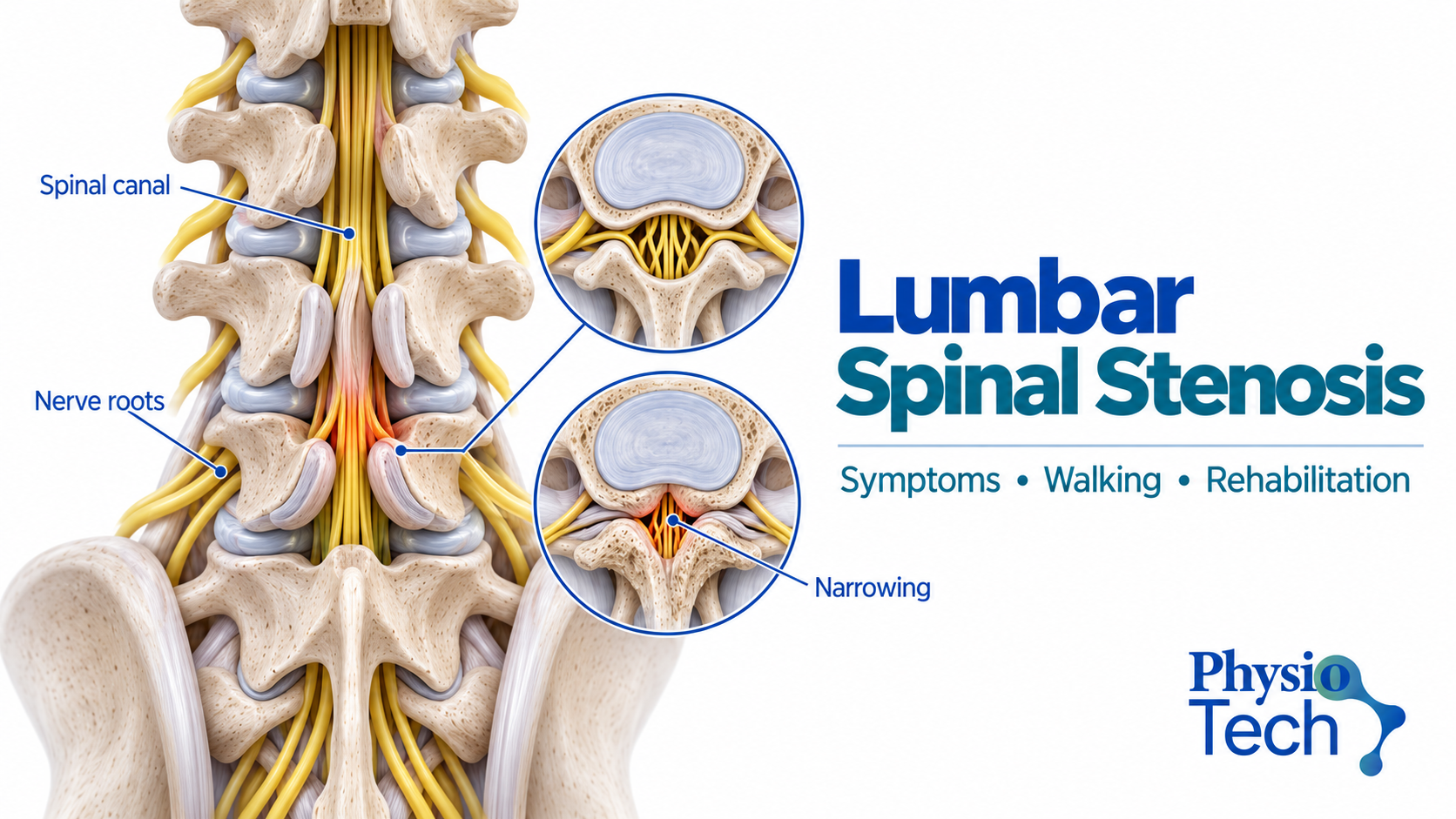
اقرأ المقال بالعربيةLumbar spinal stenosis means reduced space around nerves in the lower back. It may be related to changes in discs, joints and ligaments and often develops gradually. Imaging alone does not define the problem; symptoms and examination must fit.
## Common symptoms
Leg pain, heaviness or numbness during standing and walking, relative relief with sitting or bending forward, reduced walking distance, and sometimes weakness or balance difficulty may occur. This pattern is called neurogenic claudication, but vascular claudication can look similar.
## Why people differ
The degree of narrowing on MRI does not always match pain severity. Strength, conditioning, movement, general health and fear of activity influence function, so the plan should treat the person rather than the image.
## PhysioTech assessment
We review walking distance and easing or aggravating postures, then assess lumbar and hip movement, strength, sensation, reflexes, balance and gait. Cardiovascular disease, diabetes, medication and red flags are considered.
## Physiotherapy programme
Management may include education and pacing, movement in comfortable directions, trunk and leg strengthening, stationary cycling or interval walking, balance training, manual therapy for relevant restrictions, and a home programme with gradual walking progression.
Electrical stimulation may support short-term symptom control, but it does not anatomically widen the canal or replace active rehabilitation.
## Can surgery be avoided?
Many people improve function with conservative care even though anatomical changes remain. Surgery may be discussed when disabling symptoms persist despite appropriate care or neurological function deteriorates. Physiotherapy helps improve capacity and supports informed decision-making.
## Urgent review
New bladder or bowel dysfunction, saddle numbness, rapidly progressive weakness or severe pain after trauma require urgent care. Leg pain with coldness, colour change or weak pulses needs vascular assessment.
## Measuring success
Walking time and distance, speed, stairs, daily activities, symptom intensity and next-day response are tracked. PhysioTech adjusts the programme according to these outcomes.
> This guide does not replace individual examination.