Share:
91 views
#الانزلاق الفقاري #ألم أسفل الظهر #علاج طبيعي #spondylolisthesis #physiotherapy Maadi
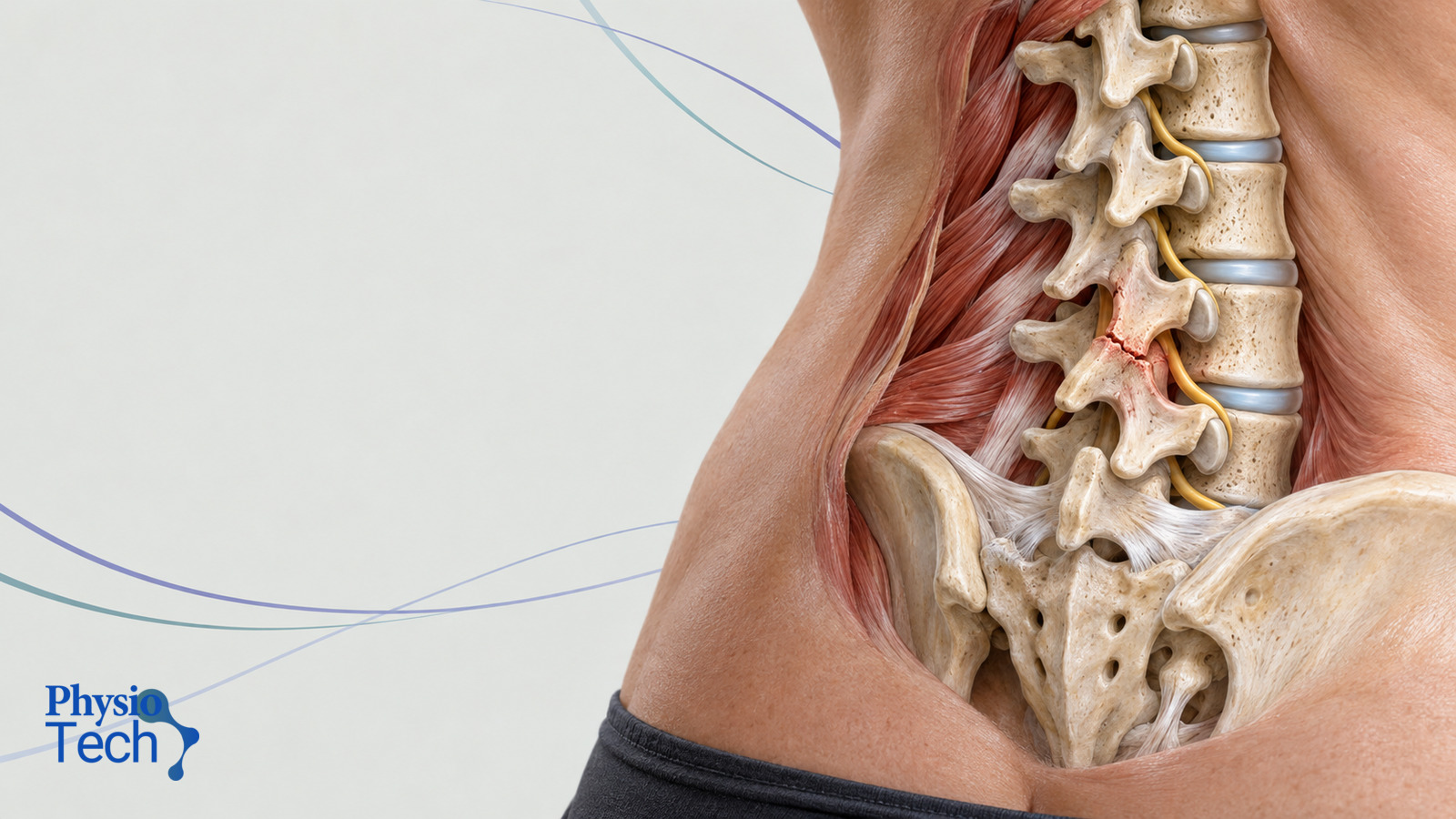
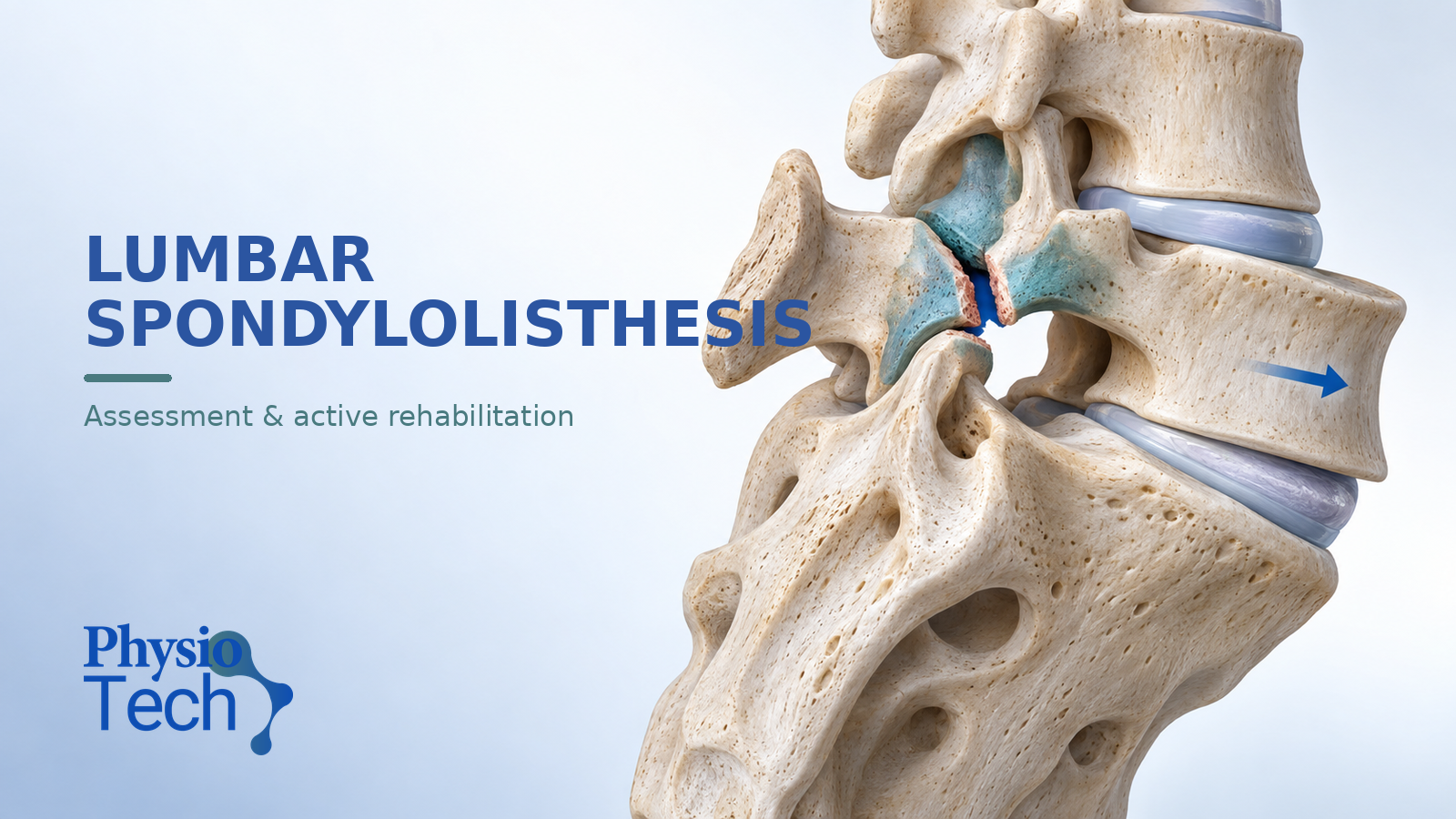
Lumbar spondylolisthesis means that one vertebra has shifted forward relative to the vertebra below it. It may appear on imaging without causing symptoms, while some people experience lower back pain, leg symptoms or reduced tolerance for standing and walking. Treatment decisions should therefore be based on the relationship between symptoms, examination findings, movement and function—not imaging alone.
اقرأ المقال بالعربيةSpondylolisthesis Versus a Herniated Disc
Spondylolisthesis describes the position of one vertebra relative to another. A disc herniation involves a change in the intervertebral disc. Their symptoms may overlap, and both can exist together, so an accurate history and neurological and movement examination are essential.
Possible Symptoms
Possible features include lower back pain aggravated by certain positions or activities; pain, tingling or numbness into the buttock or leg; fatigue or discomfort during prolonged standing or walking; and reduced ability to work, exercise or complete daily tasks. Some people have no symptoms despite changes on an X-ray or MRI.
When Is Urgent Medical Assessment Needed?
Seek prompt medical assessment for new or progressive leg weakness, loss of bladder or bowel control, saddle numbness, severe pain after trauma, unexplained fever or weight loss, or constant severe night pain. These signs do not automatically indicate a serious disorder, but they should not be ignored.
How PhysioTech Assesses Lumbar Spondylolisthesis
Connecting Symptoms With Examination and Movement
At PhysioTech Clinic in Zahraa El Maadi, Cairo, assessment begins with how symptoms respond to sitting, standing, walking and bending. The physiotherapist then examines movement, strength, endurance and, when indicated, sensation and reflexes. Imaging is reviewed in context rather than treated as the complete functional diagnosis.
Identifying Contributing Factors
The assessment considers work and sports loads, movement strategies, sleep, walking tolerance, general conditioning, fear of movement and previous injuries or surgery. This allows the plan to target modifiable factors instead of applying a standard programme to every patient.
Physiotherapy Treatment
Education and Activity Management
The patient receives a clear explanation of the findings and practical ways to modify aggravating activities without unnecessary prolonged rest. Walking, standing and loading are progressed according to the response during activity and over the following day.
Exercise Therapy and Graded Loading
Treatment may include trunk and pelvic control, hip and leg strengthening, endurance training and practice of work- or sport-specific tasks. Exercise selection, range and dosage are individualised; there is no single best exercise for every presentation.
Manual Therapy and Adjunct Modalities
Manual therapy may be used in selected cases to improve mobility or provide short-term symptom relief that supports exercise participation. Electrotherapy or therapeutic ultrasound may occasionally be considered after assessment. These are adjuncts and do not replace assessment, exercise therapy or graded loading.
Reassessment and Safe Return to Function
Progress is measured using walking and standing tolerance, movement, strength, task quality and symptom response to load. The plan is adjusted as these measures change, supporting a gradual and safe return to work, daily activity or sport.
Is Surgery Always Necessary?
No. Conservative management may be appropriate when there is no progressive neurological deficit or other indication for urgent surgery. A spine specialist review is important when weakness progresses, disability remains severe despite appropriate care, or nerve compression requires further investigation.
Frequently Asked Questions
Can exercise reverse the slip on an X-ray?
The main goal is to improve pain, movement, strength and function rather than change the image itself. Function can improve even when the radiographic appearance remains unchanged.
Must I permanently avoid bending or lifting?
Not necessarily. Some movements may be modified temporarily and then retrained progressively according to symptoms and functional needs.
How many physiotherapy sessions will I need?
The number varies with symptom severity, neurological findings, duration, health status and goals. The plan should be based on assessment and measurable progress rather than a fixed number for everyone.
Book an Assessment in Cairo and Maadi
If lower back or leg symptoms are limiting walking, work or exercise, PhysioTech Clinic in Zahraa El Maadi can assess whether physiotherapy is appropriate and develop an individual, measurable plan, with medical referral when required.