Share:
100 views
#الألم العضلي #الألم العصبي #تنميل الأطراف #ألم الأعصاب #التشخيص التفريقي
# Muscle Pain vs Nerve Pain: How to Tell the Difference
اقرأ المقال بالعربيةPeople describe pain as tight, aching, burning, electric or numb. These words help but cannot identify the source alone. Muscle and nerve pain can overlap, while joints and tendons may mimic both. Diagnosis uses the history and examination.
## Features that may accompany muscle pain
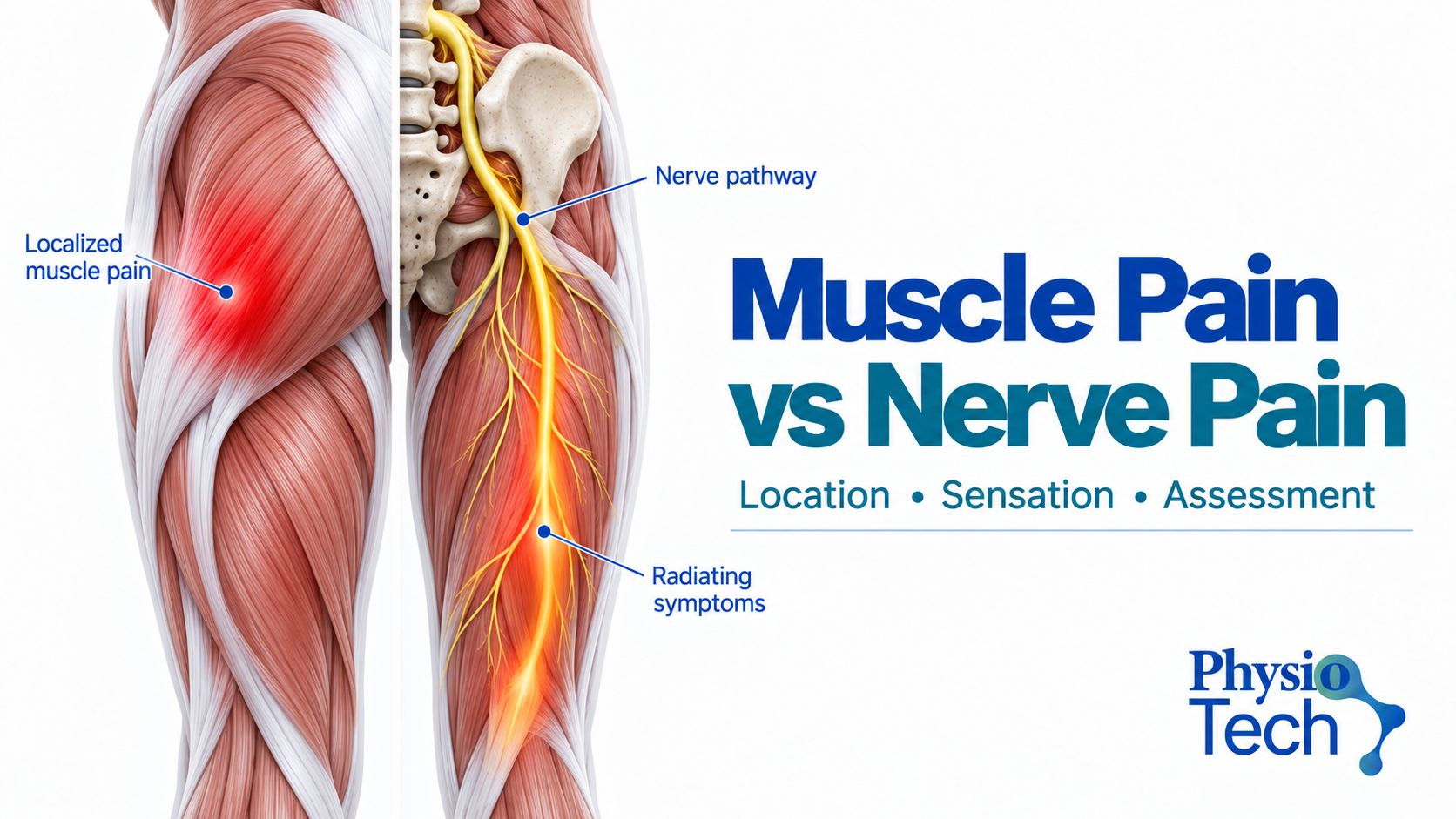
Symptoms may be localised around a muscle, feel tight or sore, increase with resisted contraction or stretch, and be tender after new load, exercise or repetition. Muscular pain can also refer nearby, and a tender point is not the only explanation for pain.
## Features that may accompany nerve pain
Neural symptoms may burn, shoot or feel electric and can include tingling, numbness, altered sensation or weakness. They may follow a pathway into an arm or leg and change with spinal position or neural loading.
Not every episode of numbness means a herniated disc. Nerves may be compressed at the wrist, elbow or elsewhere, and general medical conditions can contribute.
## PhysioTech examination
We map symptoms and their behaviour, then assess movement, strength, resisted muscle tests, sensation, reflexes when indicated, and neural-tension tests. Joints and tendons are examined, while medical history and medication are reviewed.
## Are scans necessary?
Not for every pain. Imaging or tests may be needed after major trauma, with progressive weakness, systemic signs, or when the result would change management. A scan finding is not automatically the symptom source.
## Treatment differences
Load-related muscle pain may respond to load adjustment, progressive strengthening and mobility. Manual therapy or dry needling can support selected cases.
Neural pain requires identifying irritability and likely cause. Management may include position and load changes, direction-specific movement, carefully dosed neural mobility and strength. Exercises that cause persistent increases in numbness or weakness should not be forced.
Electrical stimulation or therapeutic ultrasound may support selected symptoms, but they do not replace diagnosis and active rehabilitation.
Seek prompt medical care for increasing weakness, dropping objects, gait difficulty, bladder or bowel loss, saddle numbness, severe post-trauma pain, fever with redness or swelling, chest pain or breathlessness.
PhysioTech connects symptom behaviour with objective examination and function, then refers medically when necessary.
> Educational content only; it does not replace diagnosis.