Share:
73 views
#PCL #الرباط الصليبي الخلفي #إصابات ركبة #تأهيل #المعادي
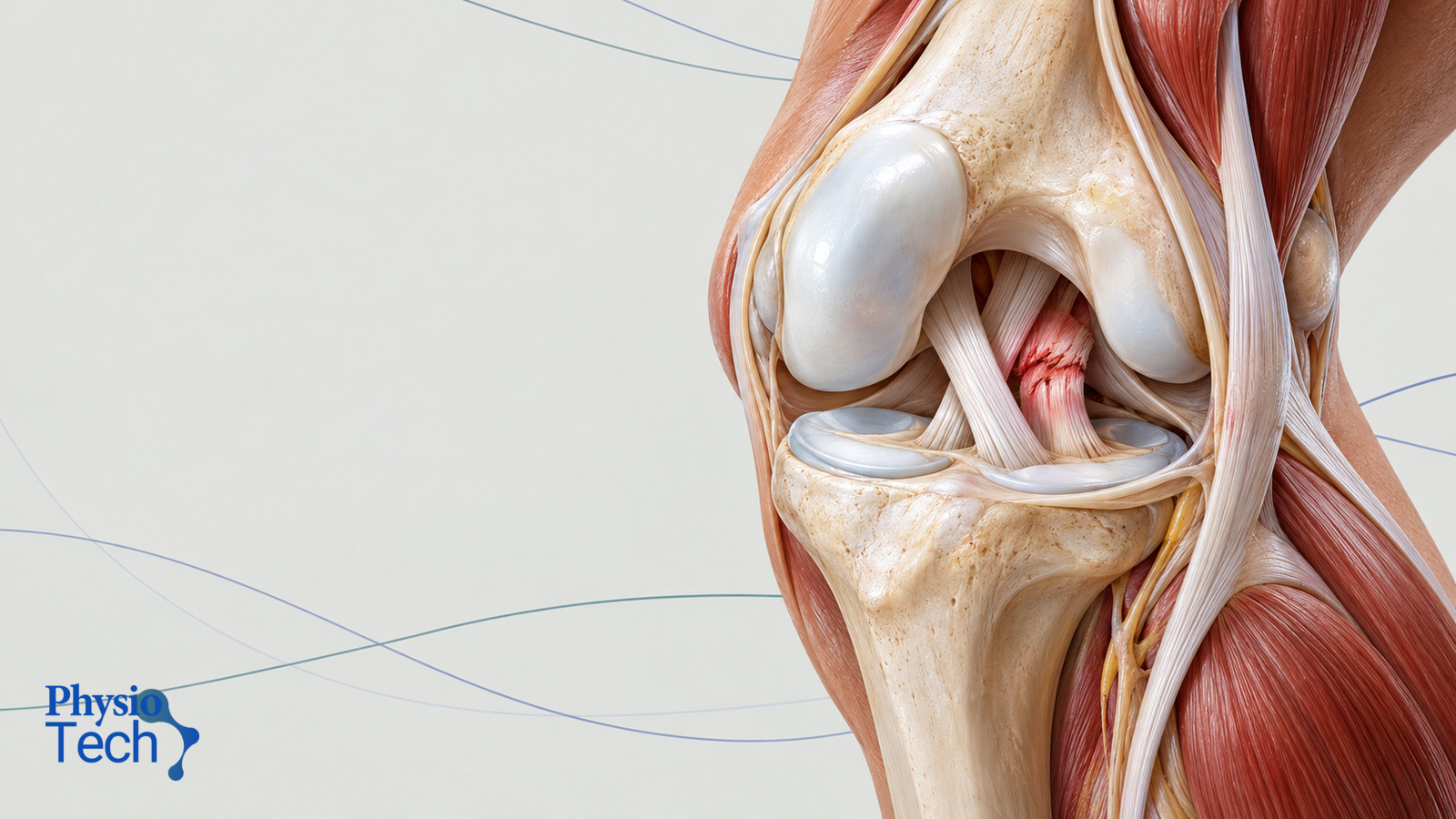
The posterior cruciate ligament, or PCL, limits excessive backward movement of the tibia relative to the femur. It is commonly injured when a strong force hits the front of a bent knee, such as in sport or a dashboard injury. A PCL tear may occur alone or with damage to other ligaments, so careful assessment is important.
اقرأ المقال بالعربيةPossible symptoms
Symptoms may include pain and swelling in or behind the knee, difficulty walking or descending stairs, and a sense that the knee shifts backward or feels unstable. Partial injuries can be less obvious, especially after the early swelling settles.
PCL injury grades
Injuries range from a sprain or partial tear to a complete rupture with clear posterior laxity. Associated damage to the collateral ligaments or ACL changes management. MRI grade alone is not enough; findings should be connected to examination, stability, and the person's functional demands.
When urgent assessment is needed
Seek prompt care after major trauma or a vehicle collision, or with deformity, rapid swelling, inability to bear weight, foot numbness, coldness, or color change. These signs may indicate a complex injury requiring urgent medical evaluation.
Diagnosis and functional assessment
Assessment covers the injury mechanism, swelling, range of motion, knee-stability tests, thigh and hip strength, walking, and stair tolerance. X-rays or MRI may be requested when a complete or combined injury is suspected. Progress is tracked with measurable criteria rather than time alone.
Physiotherapy for PCL injury
Suitable isolated injuries may respond well to non-surgical management depending on grade and stability. Rehabilitation initially protects the knee, reduces swelling, and restores extension, then progressively builds quadriceps and hip strength while controlling loads that push the tibia backward. Balance, running, and change-of-direction work are added according to testing.
When is surgery considered?
Surgical review is more likely for combined ligament injuries, severe instability, complete tears with persistent disability, or high athletic demands that do not improve through rehabilitation. The decision requires a knee surgeon's assessment and a coordinated pre- and postoperative plan when surgery is chosen.
Returning to sport
Return is not based on the calendar alone. We review range of motion, side-to-side strength, landing and hopping control, running and direction changes, confidence, and the absence of post-training swelling. A staged return limits sudden spikes in load.
Book a knee assessment at PhysioTech
If a major injury or persistent instability is limiting stairs or sport, book an assessment at PhysioTech Clinic in Zahraa El Maadi. We identify rehabilitation needs and coordinate medical referral when a combined injury is suspected.
Medical source
This article draws on information from the American Academy of Orthopaedic Surgeons about PCL injuries. It is educational and does not replace medical diagnosis.