Share:
80 views
#وضعية الجسم #التحكم الحركي #آلام الجلوس #تصحيح القوام #العلاج الطبيعي
# Posture and Movement Control: Is There a Perfect Posture?
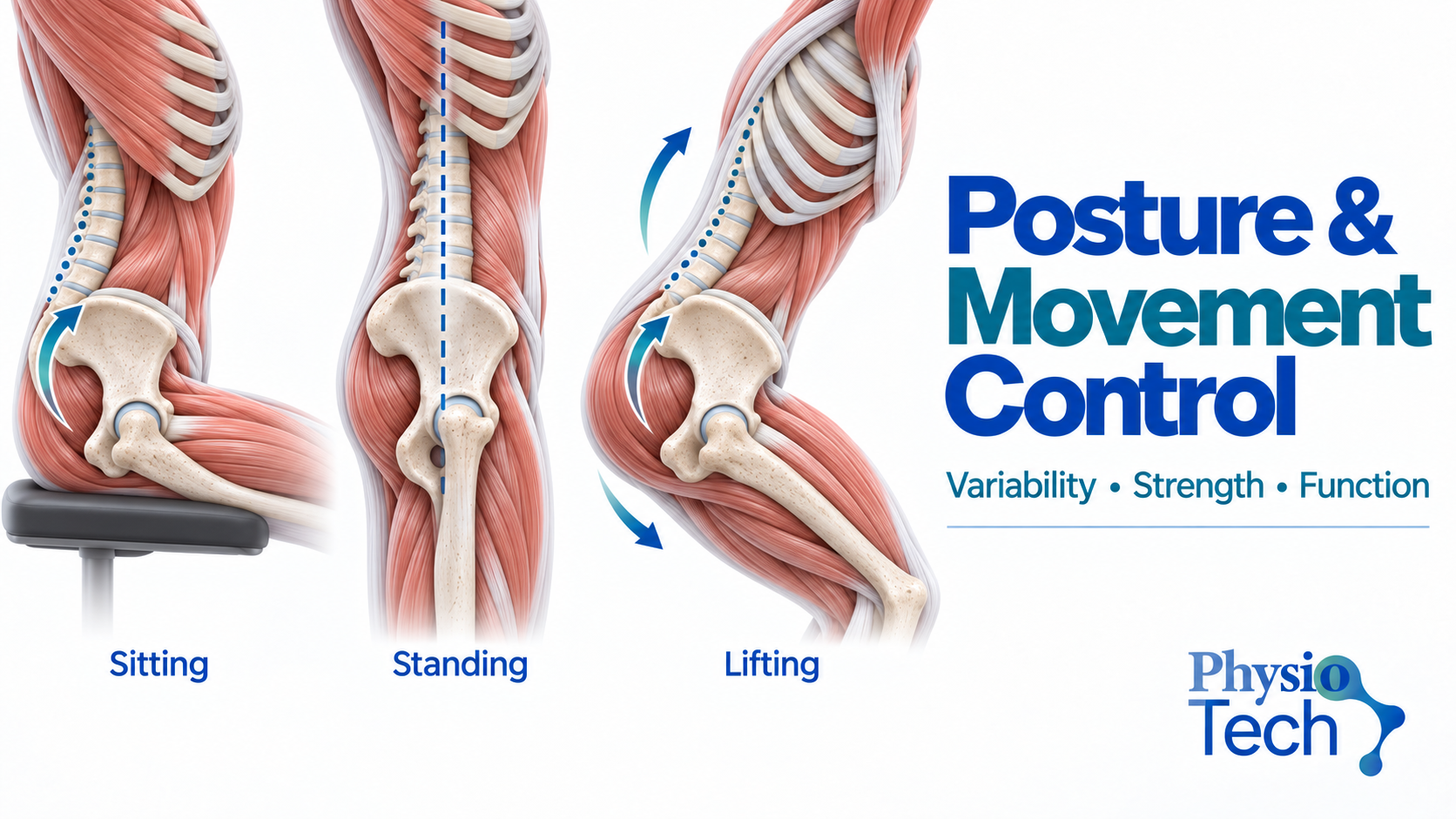
اقرأ المقال بالعربيةPain is often blamed on “bad posture,” but the relationship is more complex. No single shape must be maintained all day. Even an upright position can become uncomfortable when held for hours. What matters is movement variety, tissue capacity and the ability to change position.
## Is slouched sitting dangerous?
Spinal flexion is a normal human movement. A position may provoke one person's symptoms without being harmful to everyone. Assessment considers the dose: sitting duration, movement breaks, symptom response, strength, sleep and activity.
## What is movement control?
It is the nervous system and muscles organising movement for a task. It does not mean rigidly bracing the spine. It means adapting during sitting, lifting, running and work as speed or load changes.
## Why pain develops
Sudden increases in sitting, low conditioning, reduced sleep, work stress, fear of movement or poorly progressed training may contribute. The solution is rarely to pull the shoulders back all day.
## PhysioTech assessment
We examine meaningful activities, movement, strength, endurance and task demands. Sitting, sit-to-stand, lifting or sport-specific movements may be observed to identify practical options rather than judge appearance.
## Rehabilitation
Care may include movement breaks, comfortable workstation adjustment, mobility work, progressive trunk, hip or shoulder strength, lifting and work-task practice, graded exposure to avoided movements, and review of sleep and weekly load.
Manual therapy or symptom-relief modalities can support short-term comfort, but strength, endurance and confidence are central.
An expensive chair is not always necessary. Adjustable support can help, but simple screen, foot and desk changes plus regular movement are often useful.
Seek medical assessment for progressive weakness, sensory loss, bladder or bowel change, major trauma, fever, unexplained weight loss or unusual night pain.
PhysioTech helps patients develop adaptable movement instead of fear of one body shape.
> Educational content only; assessment remains individual.