Share:
99 views
#التأهيل بعد الكسور #العلاج الطبيعي بعد الجبس #استعادة الحركة #تقوية بعد الكسر #المشي بعد الكسر
# Rehabilitation After Fracture: From Protection to Strength
اقرأ المقال بالعربيةBone union is essential, but it does not automatically restore movement, strength and balance. After casting or surgery, stiffness, swelling, weakness, sensitivity and altered walking may remain. Rehabilitation connects protection of healing tissue with gradual return of function.
## What determines loading?
The orthopaedic surgeon sets weight-bearing and movement limits according to fracture location, pattern, stability, fixation and follow-up imaging. One patient's programme cannot be copied to another.
## Common stages
### Protection
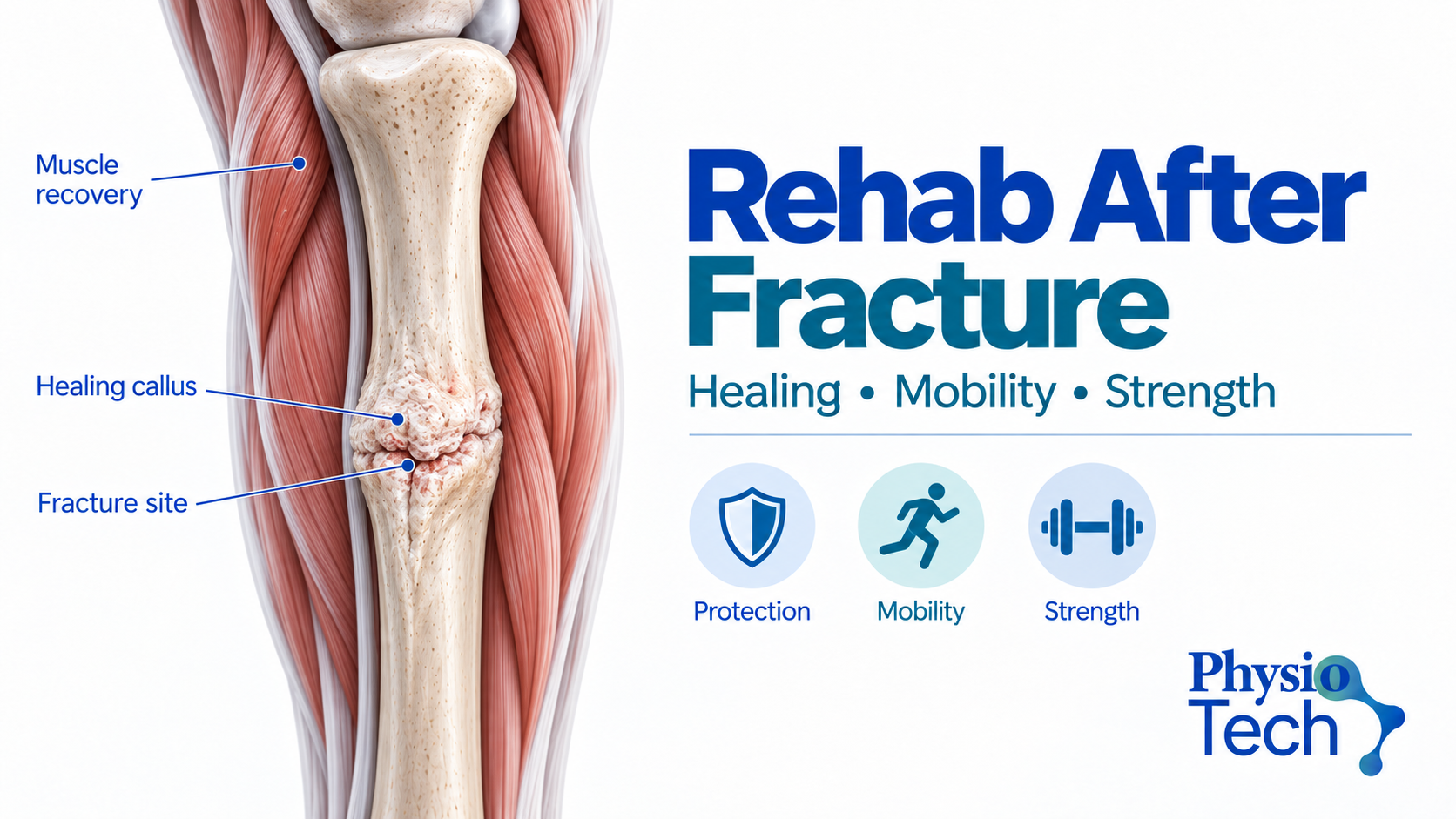
Protect healing, control swelling and pain, and maintain allowed movement in non-immobilised joints. Circulation work and movement of fingers or nearby joints may be appropriate.
### Restore motion
After clearance, active and assisted movement progresses according to symptoms. Aggressive force is not proof of effective treatment and can irritate tissue.
### Restore strength
Exercise advances from low-level contractions to resistance and weight-bearing. Muscles around the fracture and the wider kinetic chain are addressed.
### Balance and gait
Lower-limb rehabilitation restores walking, adjusts walking aids, and trains balance and stairs. Upper-limb care develops grip, reach, push, pull and fine tasks.
### Work and sport
Job- or sport-specific loading may include carrying, running, jumping, throwing or hand skills. Return requires confirmed healing and functional capacity, not pain reduction alone.
## PhysioTech care
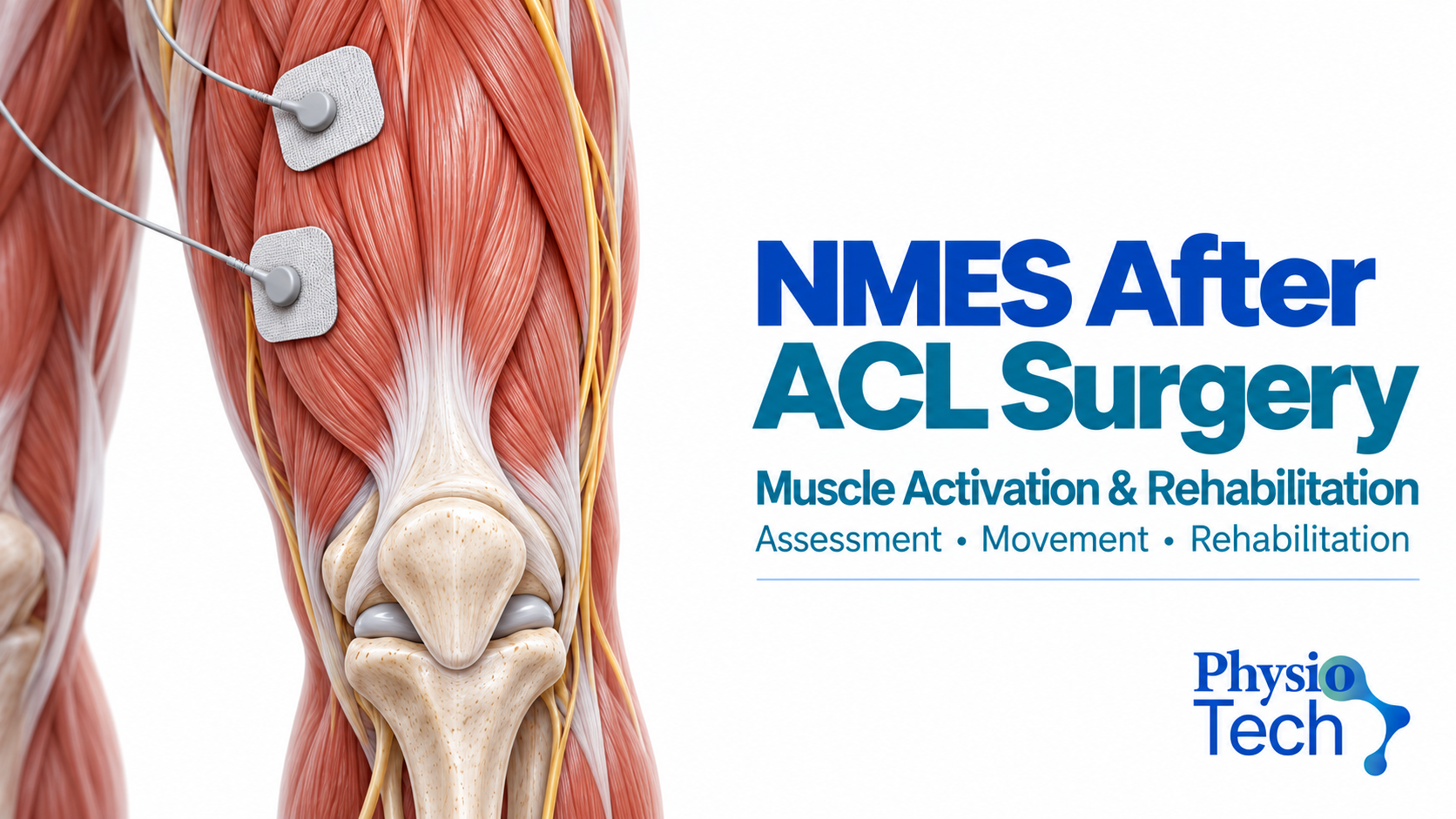
We measure motion, swelling, strength, gait and meaningful tasks. Manual therapy may address stiffness, electrical stimulation may support muscle activation, and kinesiology taping may assist selected swelling presentations. Progressive exercise and loading remain the foundation.
Follow medical advice regarding nutrition, vitamin D or calcium when needed, and avoid smoking. Do not start supplements without professional review.
Seek urgent review for unusual increasing pain or swelling, wound heat or discharge, fever, numbness, a cold or discoloured limb, severe calf pain or shortness of breath.
Recovery time varies with bone, age, health, injury, surgery and immobilisation. PhysioTech coordinates loading changes with the medical team.
> General information only; surgeon instructions take priority.