Share:
98 views
#العودة للملعب #الرباط الصليبي #ACL #اختبارات القفز #تأهيل إصابات الملاعب
# Return to Sport After ACL: Testing and Criteria
اقرأ المقال بالعربيةTime since ACL reconstruction does not by itself make an athlete competition-ready. Safe return is a progression based on tissue healing, knee status, strength, movement quality, load tolerance, sport skills and psychological readiness.
## Running, training and competition are different
Return to running means tolerating graded straight-line running. Return to training progresses from partial to full team work. Return to sport means competition exposure, while return to performance means approaching the previous level. These are stages, not one date.
## Basic prerequisites
The knee should be relatively quiet, with full extension, suitable flexion and no meaningful swelling increase after training. Pain, stability and running mechanics are reviewed before advanced hopping and cutting.
## Strength testing
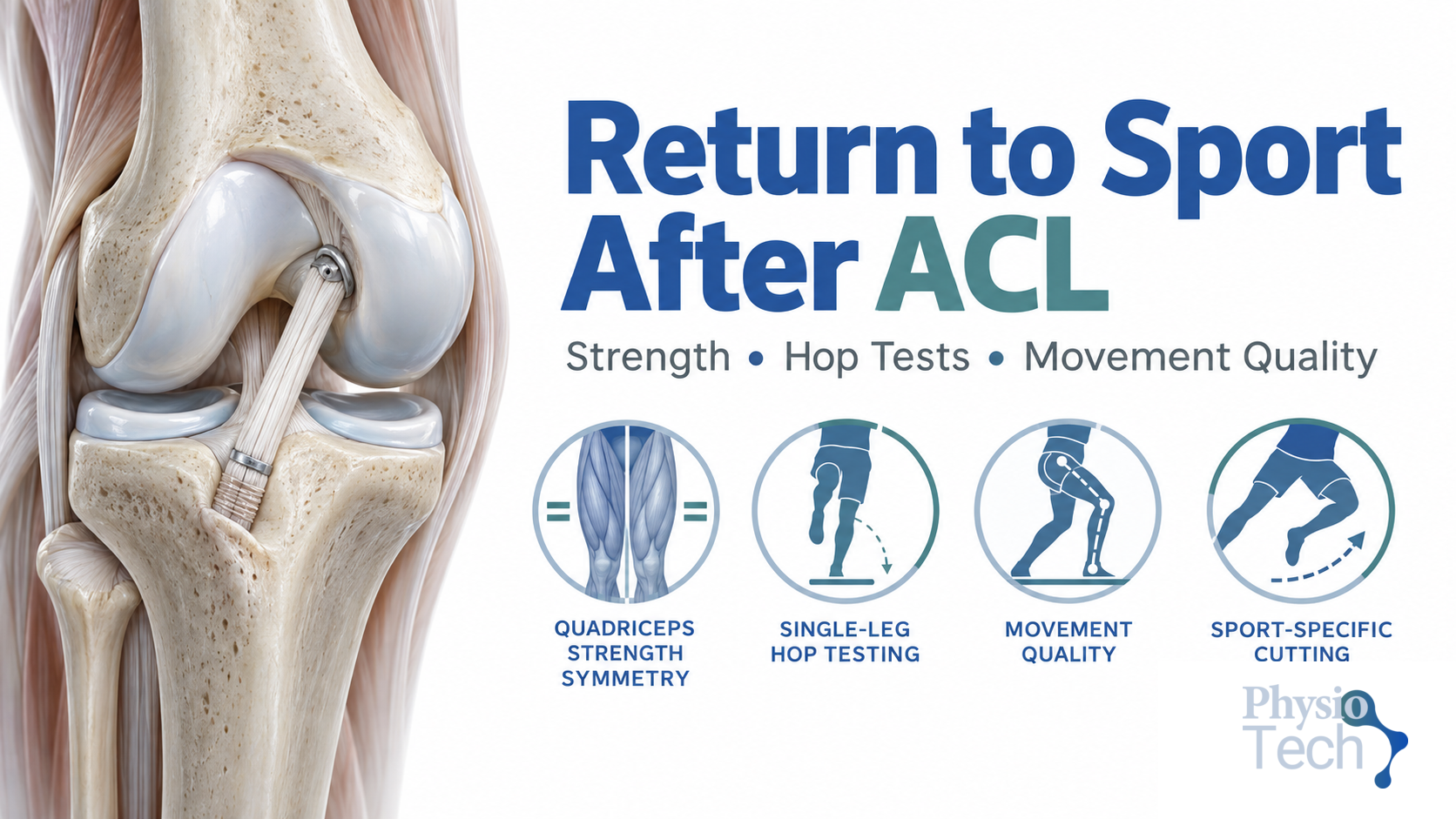
Quadriceps, hamstring and hip strength should be measured objectively where possible. Side-to-side comparison is useful but can hide weakness in both legs, so values should also be considered relative to body weight, sport and previous level.
## Hop tests and landing quality
Single, repeated and lateral hop tasks may be used. Distance alone is not enough; landing strategy, trunk and pelvic control, knee alignment and post-test symptoms matter.
## Agility and cutting
Training progresses from acceleration and deceleration to planned cuts, then reactions to unexpected stimuli. The demands should resemble the speed and decision pressure of the sport.
## Psychological readiness
Fear of reinjury and trust in the knee affect movement and decisions. Conversation, appropriate questionnaires and graded exposure are used instead of sudden return to competition.
## Load management
Training intensity, volume and frequency are monitored with same-day and next-day knee response. New swelling or loss of motion signals a need to adjust the dose.
## PhysioTech pathway
PhysioTech builds from strength to running, hopping, landing, agility and sport-specific skills, sharing results with the surgeon and coach when appropriate. Manual therapy or electrical stimulation can support selected stages, but clearance depends on measured performance.
No single test or symmetry percentage guarantees safety. Age, sport, position, competition level and associated injuries all influence the shared decision.
> Return timing and clearance require an individual assessment.