Share:
93 views
#التأهيل بعد عمليات الكتف #جراحة الكتف #إصلاح أوتار الكتف #إصلاح الشفا #علاج طبيعي بعد العملية
# Shoulder Surgery Rehabilitation: Stages and Precautions
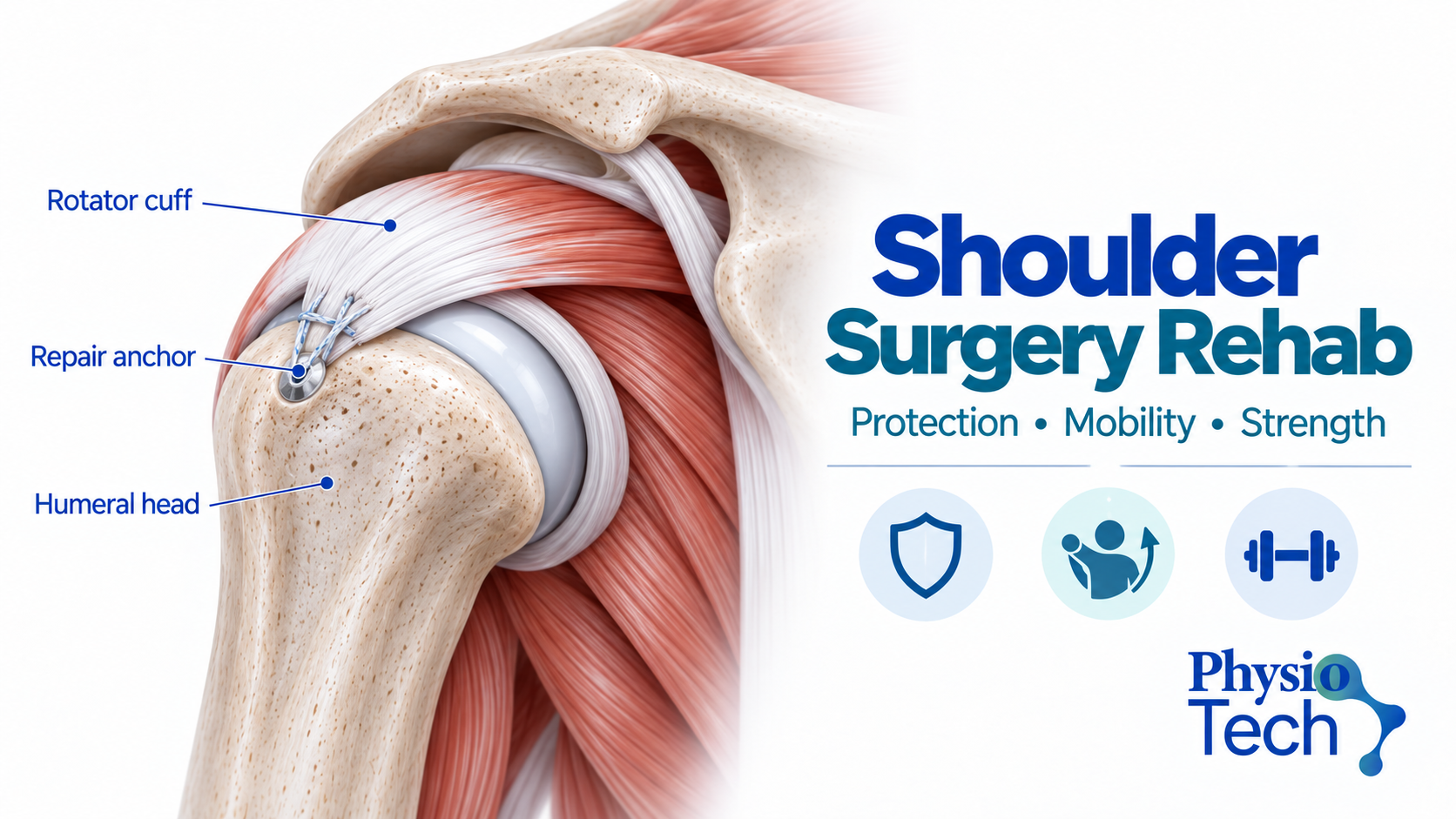
اقرأ المقال بالعربيةThere is no single protocol for every shoulder operation. Rotator cuff repair differs from labral repair, stabilisation, capsular release, biceps tenodesis or replacement. Planning begins with the operative report, tissue quality, surgeon instructions and patient goals.
## Why protection matters
Early pain relief does not mean repaired tissue is fully healed. Some tendons need weeks of protection before strong resistance, while excessive rest can increase stiffness. Rehabilitation balances protection with appropriate movement.
## Stage 1: Pain control and protection
A sling may be used according to instructions. Sleep position, hand, wrist and elbow motion, swelling control and circulation are addressed. Shoulder movement remains within permitted limits.
## Stage 2: Restore motion
Movement may progress from passive or assisted to active depending on the procedure. Quality and shoulder-hiking compensation are monitored. Forceful stretching is avoided, especially after tendon or labral repair.
## Stage 3: Activation and strength
When cleared, rotator cuff and shoulder-blade exercise begins with low load and progresses. Trunk, arm and grip are included because shoulder function belongs to a full movement chain.
## Stage 4: Function, work and sport
Overhead reach, carrying, pushing and pulling develop before job- or sport-specific work such as swimming and throwing. Athletes require suitable strength, endurance, control and speed.
## Procedure-specific differences
Rotator cuff repair protects the tendon from early active load. Labral repair avoids positions based on repair location. Biceps tenodesis limits resisted elbow flexion and supination early. Replacement precautions depend on implant type, while capsular release may prioritise motion sooner.
## PhysioTech care
We measure pain, motion, strength, shoulder-blade control and functional tasks. Manual therapy, electrical stimulation, therapeutic ultrasound or kinesiology taping may support a clear goal, but they do not replace progressive movement and strength.
Contact the surgeon for wound heat or discharge, fever, major swelling, unusual escalating pain, a fall, new numbness or weakness, or loss of previously gained motion.
Recovery depends on procedure, age, tissue quality, work and sport. Driving, work and gym return use clearance and criteria rather than one universal week.
> Your surgeon's protocol takes priority over general information.