Share:
128 views
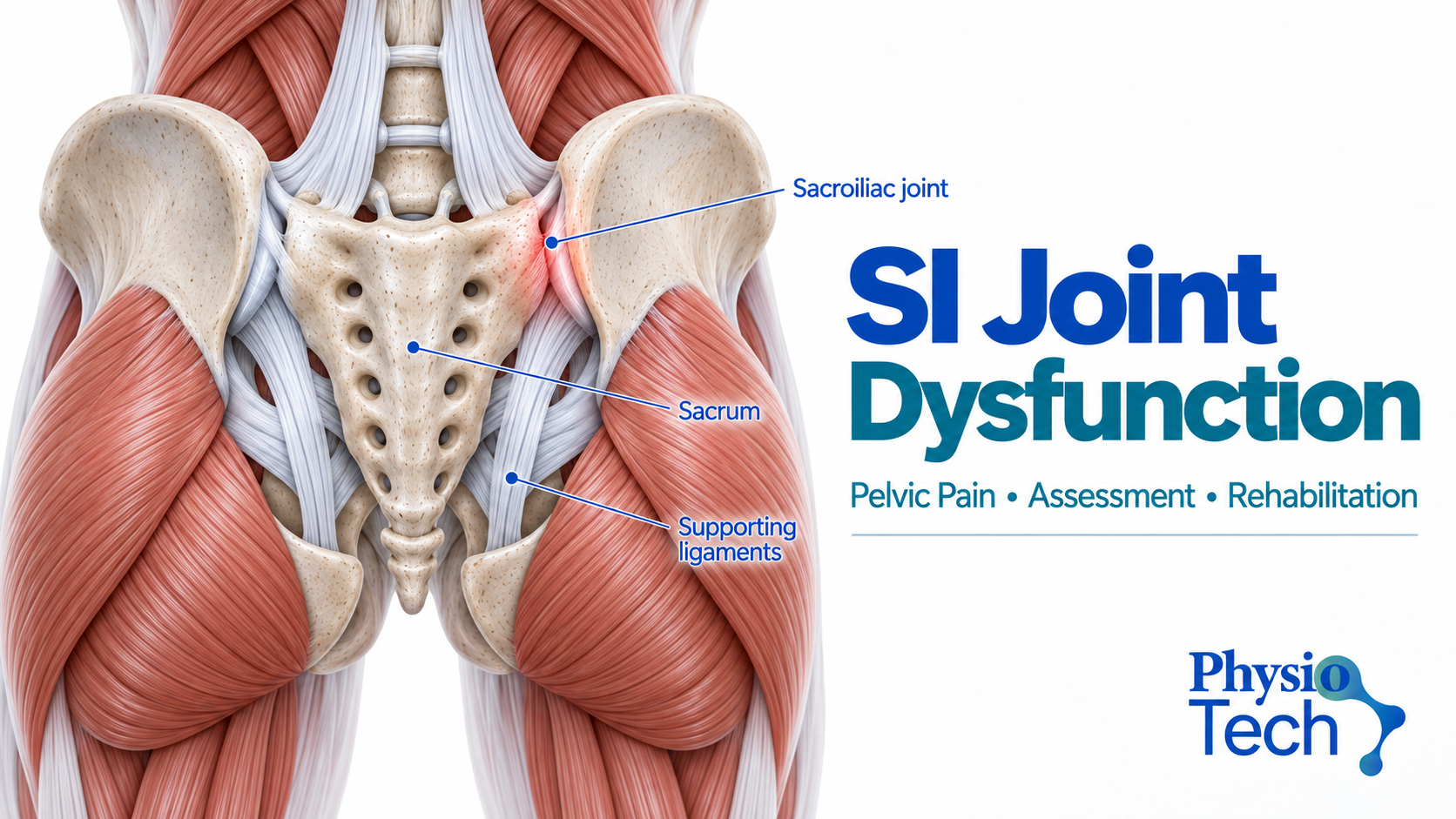
The sacroiliac joint connects the sacrum to the pelvis and transfers load between the trunk and legs. It can contribute to pain, but diagnosis should not rely on imaging or one test because symptoms overlap with lumbar and hip disorders.
اقرأ المقال بالعربيةPossible symptoms
Pain may be felt on one side near the back of the pelvis and can spread into the buttock or upper thigh. Standing on one leg, stairs, turning in bed or prolonged walking may aggravate it. Some people develop symptoms after pregnancy, trauma or a sudden change in training load.
Causes and useful language
Pain may relate to altered loading, injury, temporary changes in muscular control or inflammatory disease in less common cases. Claims that the pelvis is simply “out of place” are usually misleading. Assessment focuses on load tolerance and function.
Assessment at PhysioTech
We assess the lumbar spine, hip and pelvis. A cluster of pain-provocation tests is more useful than a single manoeuvre. Hip and trunk strength, gait, single-leg control and the patient's meaningful activities are also examined. Imaging may help exclude fracture, inflammation or another disorder but does not independently prove the source.
Physiotherapy management
A programme may include education and load modification, progressive gluteal and trunk strengthening, pelvic control during walking and stairs, and short-term manual therapy when it improves movement or symptoms. A pelvic belt may suit selected cases, including some postpartum presentations. Electrotherapy or kinesiology taping can be used selectively as support.
No single exercise fits everyone. Load and resistance are progressed according to response until the patient can resume normal activity.
When medical review is needed
Prompt review is appropriate after major trauma or with fever, unexplained weight loss, persistent night pain, progressive weakness or numbness, or bladder or bowel change. Long morning stiffness or other swollen joints may need rheumatology assessment.
Recovery
Recovery depends on cause, duration, tissue capacity and life demands. Progress is measured through walking, stairs, sleep and work—not session count alone. PhysioTech adjusts rehabilitation according to outcomes.
Educational content only; individual examination is essential.
The PhysioTech Approach to SI Joint Pain
At PhysioTech in Zahraa El Maadi, Cairo, symptom behaviour is linked to provocation tests, lumbar and hip examination, gait and single-leg control, while screening for inflammatory or neurological features requiring referral.
Contributors and Measurable Progress
Training changes, reduced pelvic capacity and postpartum demands may contribute. Walking, stairs, turning in bed and single-leg tasks provide baselines. The aim is to improve capacity, not put the pelvis back in place.
Exercise Therapy and Graded Loading
Control and strength progress toward lifting and daily tasks. Function and next-day response are retested before increasing load.
Manual Therapy and Adjuncts
Manual therapy may support movement temporarily. Kinesio taping or electrotherapy may be used selectively for short-term goals, but do not replace assessment, exercise therapy, graded loading or reassessment.
Book an individual assessment at PhysioTech Clinic in Zahraa El Maadi, Cairo, to review likely contributors and agree measurable goals.