Share:
27 views
#PhysioTech #Cairo #evidence-based physiotherapy #Manual Therapy
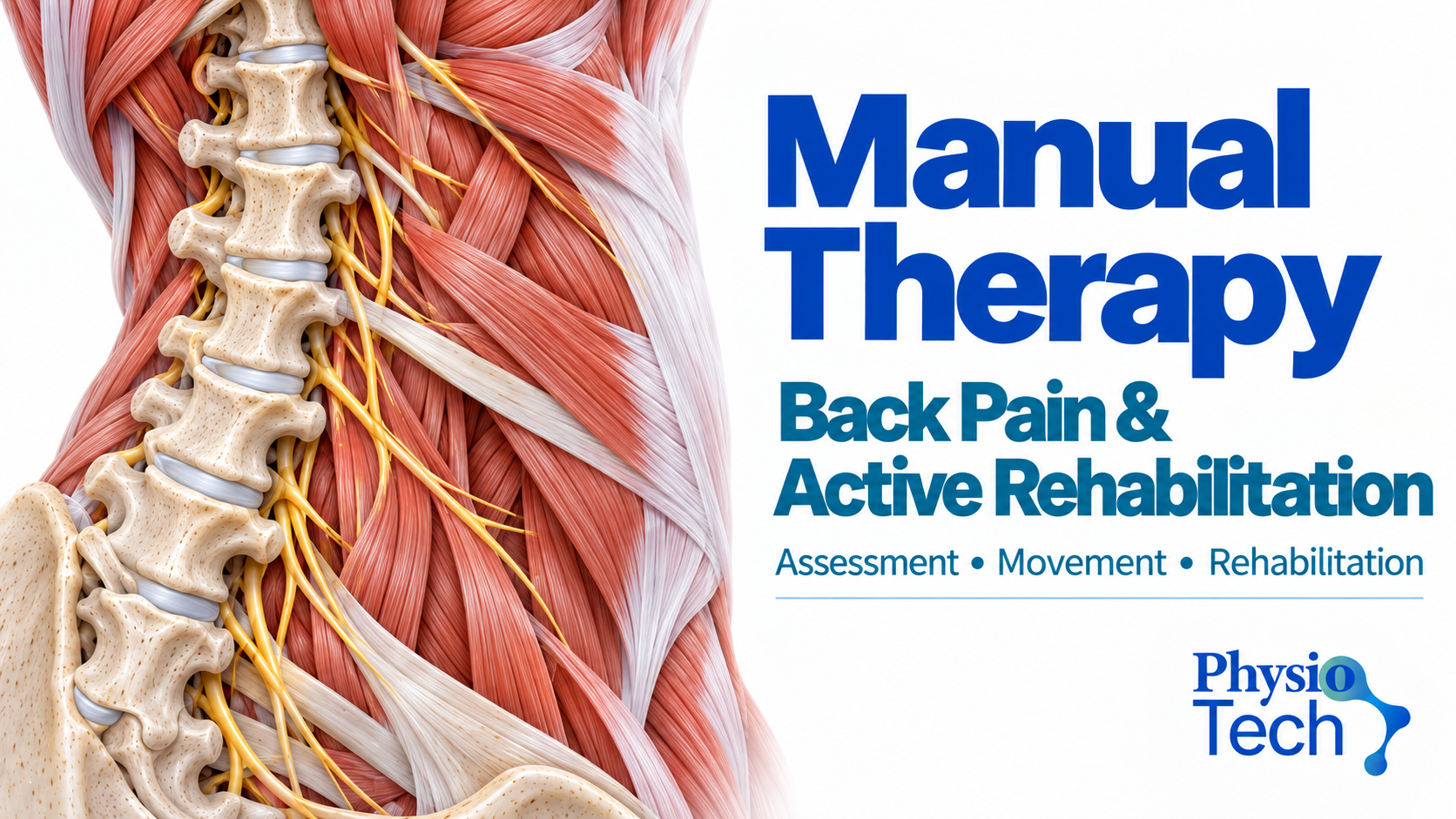
Movement may feel easier after manual therapy. That can be useful, but it does not prove that a displaced vertebra has been put back into place. Manual therapy may contribute to a plan for selected back pain presentations. Success is better judged by function and independence than by an audible crack or continuing dependence on hands-on sessions.
اقرأ المقال بالعربيةWhat does manual therapy include?
Technique selection follows assessment
Manual therapy includes joint and soft-tissue techniques with different characteristics and force levels; a session does not necessarily include a thrust. Assessment first identifies what limits movement and whether a suitable intervention may help. Explanation and consent matter. Strong pain or an audible crack is not required for a session to be useful.
What is the guideline perspective?
Part of integrated care
The 2023 WHO guidance includes selected manual interventions among options for chronic primary low back pain within person-centred care. A combination of approaches may be needed rather than a single isolated intervention. This does not mean manual treatment fits every diagnosis or replaces exercise, nor that it corrects every finding reported on MRI.
Does a crack prove structural correction?
Sound is not a recovery measure
Sound alone cannot establish that a vertebra was out of place. More relevant observations include movement before and after a session and activity tolerance over subsequent days. Perceived tightness or asymmetry is not a definitive explanation for every pain episode. A helpful explanation supports confidence rather than making the patient believe the body needs constant resetting.
Why include exercise?
Use comfort to build capacity
If movement becomes more comfortable, this can support practice and appropriate loading. Exercise is selected for a goal such as rising from a chair, walking or work tolerance, then progressed. There is no universal magic exercise. Symptoms and function guide changes, and reducing reliance on an external intervention is an important rehabilitation goal.
When may hands-on treatment be unsuitable?
Safety requires more than preference
Significant trauma, suspected fracture, relevant osteoporosis or serious neurological symptoms require appropriate assessment before technique selection. Medication, medical history and surgical stage may affect the decision. Patients may decline a technique or ask about alternatives. Hands-on treatment must not delay evaluation of progressive weakness or new bladder-control problems.
How is it used at PhysioTech?
Assessment followed by review
At PhysioTech in Zahraa El Maadi, Cairo, the intervention’s purpose is linked to home activity and gradual progression. Short-lived relief without functional progress prompts review rather than automatic repetition. The focus is daily capability, movement and understanding, not claiming that one technique outperforms every alternative or guarantees the same result for everyone.
Frequently asked questions
Is pain after treatment necessary?
No. Severe pain is not a success marker. Report increased symptoms or new neurological changes so the response can be evaluated.
Are massage and manual therapy identical?
Massage is one soft-tissue approach; manual therapy is a broader term. A label alone does not determine whether a technique is suitable for your presentation.
Is a session needed every time pain returns?
Not necessarily. Activity management and self-management are important. A changed presentation or new warning signs may require reassessment.
Assessment and treatment planning in Cairo
If this issue affects movement or work, you can book an assessment at PhysioTech in Zahraa El Maadi, Cairo, Egypt. We discuss your goals and examination findings, explain the options and limitations of each intervention, and agree an appropriate review plan. An article cannot determine the required number of sessions or guarantee an outcome; individual assessment is necessary.