Share:
27 views
#PhysioTech #Cairo #evidence-based physiotherapy #Therapeutic Ultrasound
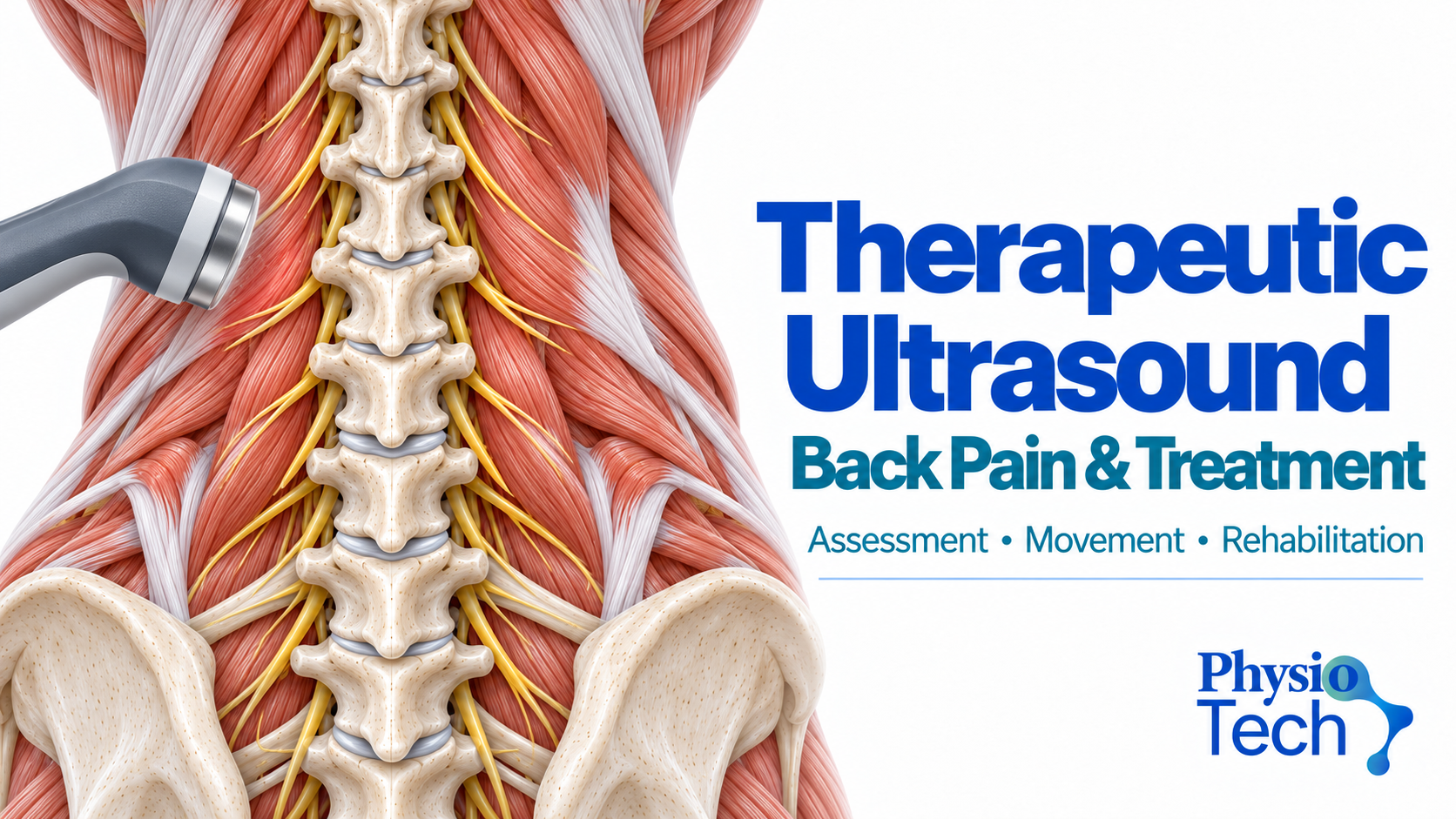
Does moving an ultrasound treatment head over the lower back repair a disc or prevent pain from returning? It is important to distinguish therapeutic ultrasound from diagnostic imaging and a proposed mechanism from a proven patient benefit. This article focuses on chronic non-specific low back pain and explains why ultrasound sessions should not replace assessment and a movement plan.
اقرأ المقال بالعربيةTherapeutic or diagnostic ultrasound?
A shared name does not mean the same purpose
Diagnostic ultrasound creates images for examining particular tissues. Therapeutic ultrasound uses a treatment head and coupling medium to deliver acoustic energy rather than image the body. Ultrasound-guided medical procedures are another distinct application. Patients should understand which intervention they are receiving and its purpose instead of relying on a vague device label.
What did the Cochrane review find?
Evidence does not support a central role
The 2020 Cochrane review included ten trials in chronic non-specific low back pain. Findings were uncertain, with low or very low certainty in several comparisons, and do not support treating ultrasound as an effective routine solution for this problem. This is not a judgement about every medical use of ultrasound and is not evidence of disc repair.
Why is a proposed heating effect insufficient?
Mechanism is not outcome
A description of energy delivery or heating may sound plausible, but it does not establish better walking, work tolerance or sustained pain relief. A relevant comparison and a patient-important outcome are needed. Improvement during a programme containing exercise and several interventions cannot identify the device alone as the cause. Ask what additional benefit justifies its time and cost.
What is a practical alternative?
A plan matched to the presentation
Start with what limits activity: fear of bending, poor sitting tolerance or pain with a particular load. The plan may include understandable education, activity planning and progressive exercise, with suitable adjuncts when needed. A fixed online exercise list is not an individual prescription. Movement responses help guide selection and subsequent adjustment.
How is the plan reviewed in Cairo?
From devices to function
At PhysioTech in Zahraa El Maadi, Cairo, a practical goal and changes in symptoms and capacity guide review. Lack of progress prompts reconsideration of the working explanation, loading, adherence and referral needs rather than indefinite repetition of the same device. Patients receive clear home guidance and know which responses should trigger a programme adjustment or contact.
When is back pain not a routine presentation?
Pay attention to new symptoms
Progressive neurological weakness, new bladder disturbance and saddle numbness require urgent assessment. Pain after significant trauma or with fever and systemic illness needs medical review. Do not delay evaluation until a course of ultrasound is completed. Device availability does not make every patient an appropriate candidate or every pain presentation a simple muscle problem.
Frequently asked questions
Does treatment ultrasound show the disc?
Therapeutic ultrasound is not a diagnostic disc scan. Do not confuse a treatment session with imaging selected by a clinician when indicated.
Should sessions be repeated if progress stalls?
Lack of progress should trigger review of the plan and goal, not an automatic increase in the same intervention. Discuss functional change since treatment began.
Does this evidence cover every injury?
No. The review concerns chronic non-specific low back pain. Other applications require their own evidence and assessment rather than a blanket judgement.
Assessment and treatment planning in Cairo
If this issue affects movement or work, you can book an assessment at PhysioTech in Zahraa El Maadi, Cairo, Egypt. We discuss your goals and examination findings, explain the options and limitations of each intervention, and agree an appropriate review plan. An article cannot determine the required number of sessions or guarantee an outcome; individual assessment is necessary.