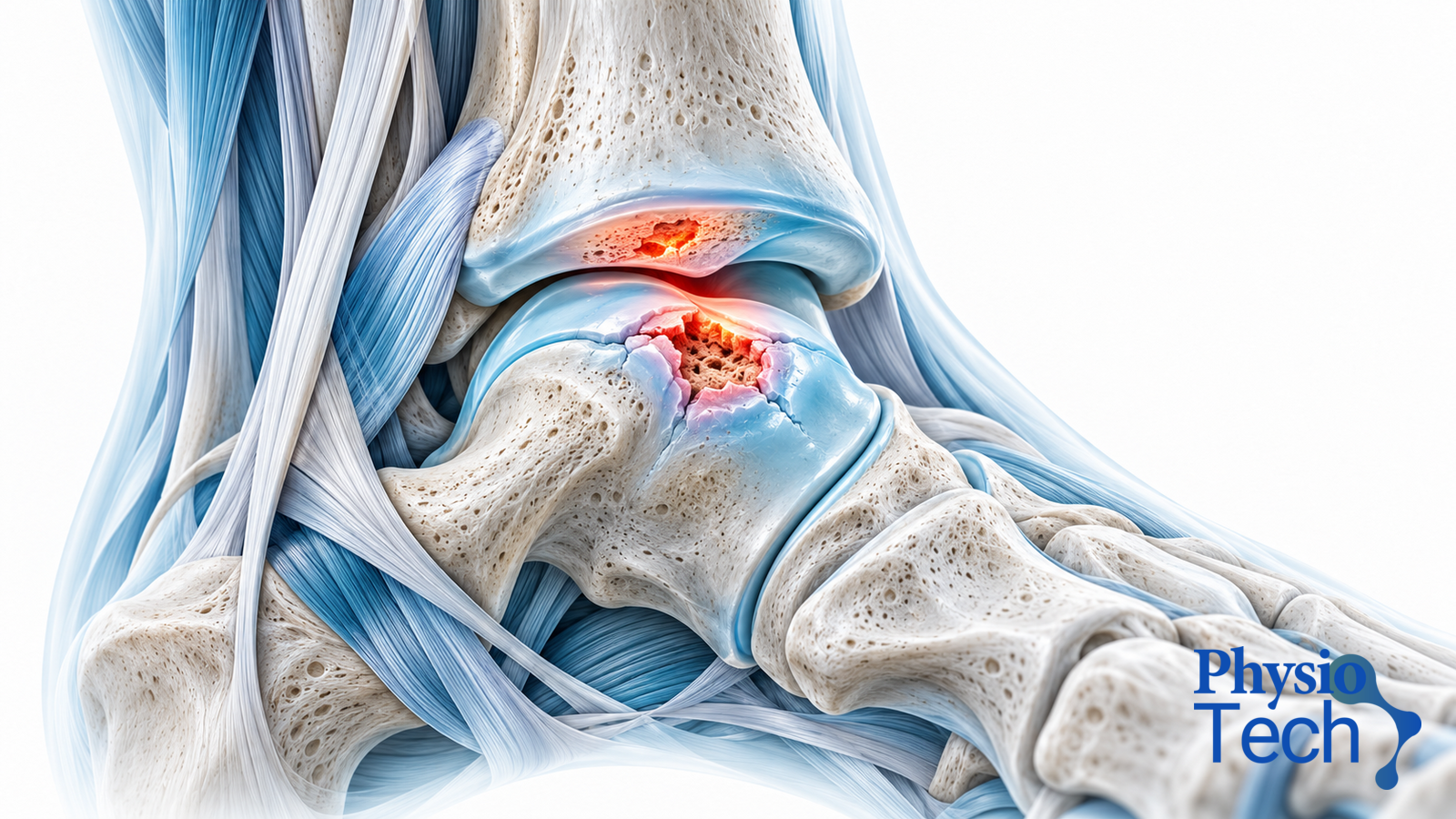
Osteochondral Lesion of the Talus: Symptoms and Rehab
A talar osteochondral lesion affects cartilage and bone and can cause deep pain, swelling or catching after an ankle sprain.
Practical guidance from our physiotherapists on pain, injuries and rehabilitation

A talar osteochondral lesion affects cartilage and bone and can cause deep pain, swelling or catching after an ankle sprain.

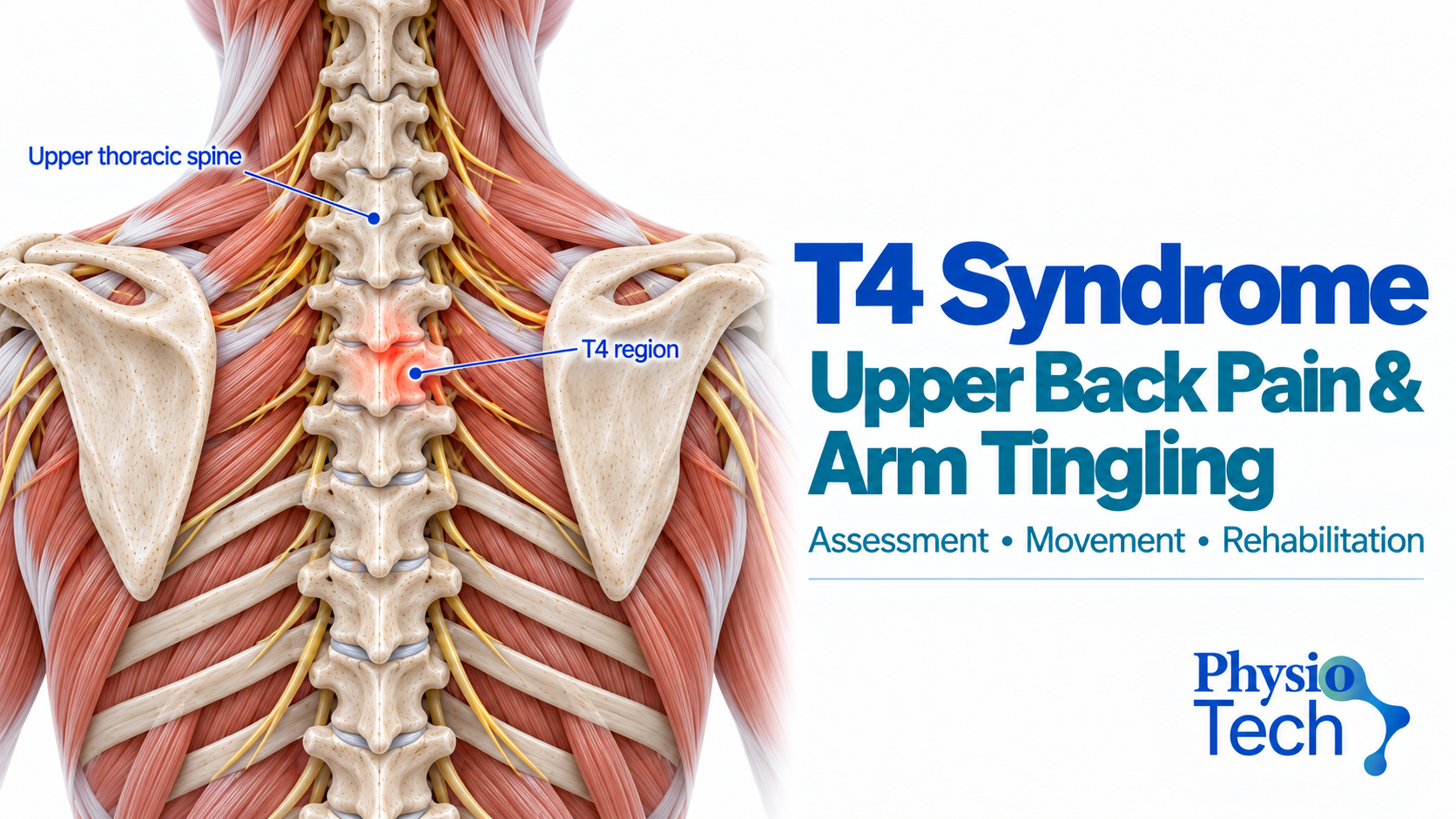
T4 syndrome is a clinical symptom pattern, not proof that one vertebra is damaged. Assessment must exclude cervical and peripheral nerve causes.

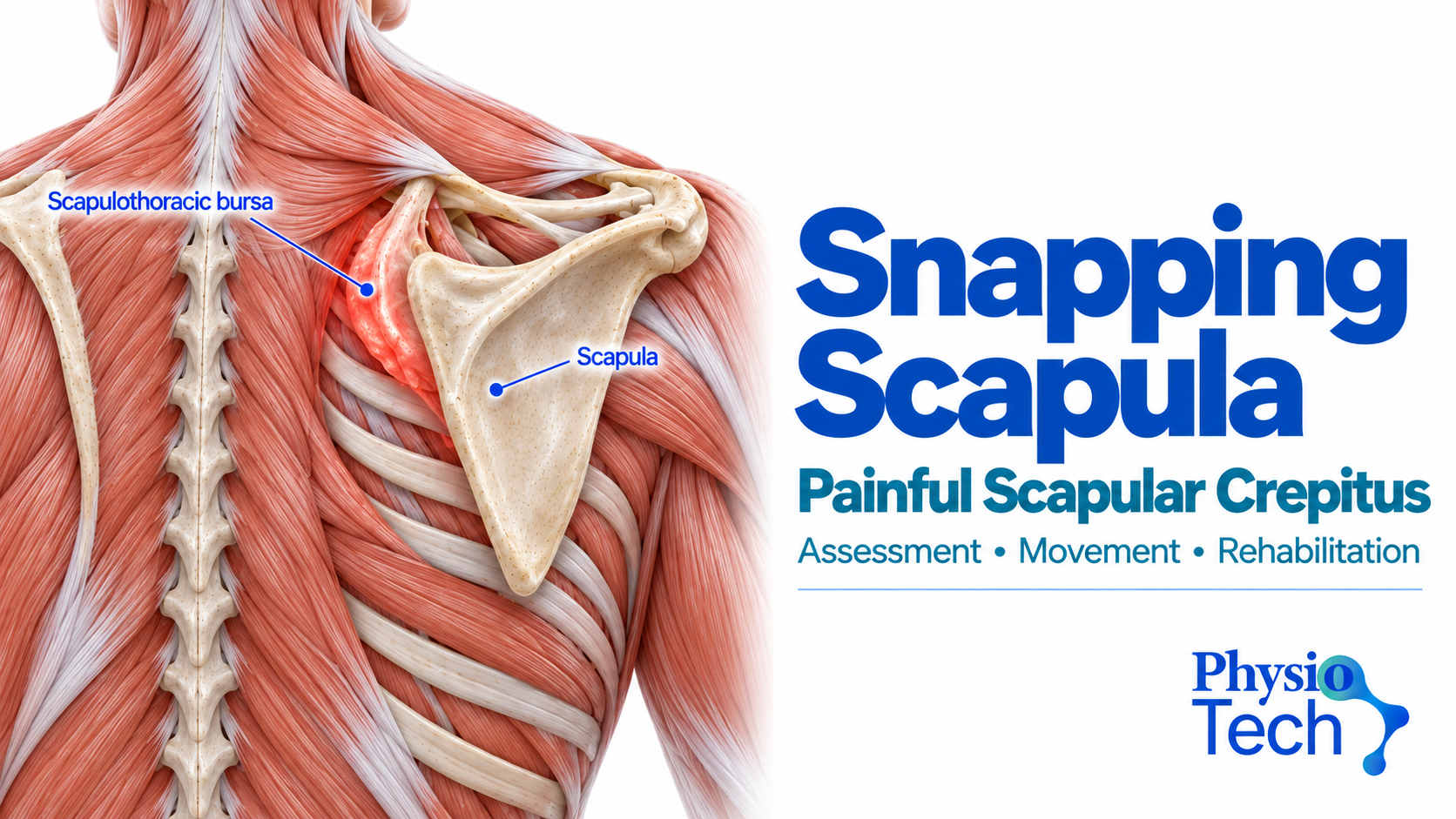
Painful scapular crepitus deserves assessment of the scapula, ribs and shoulder; noise alone does not prove injury.

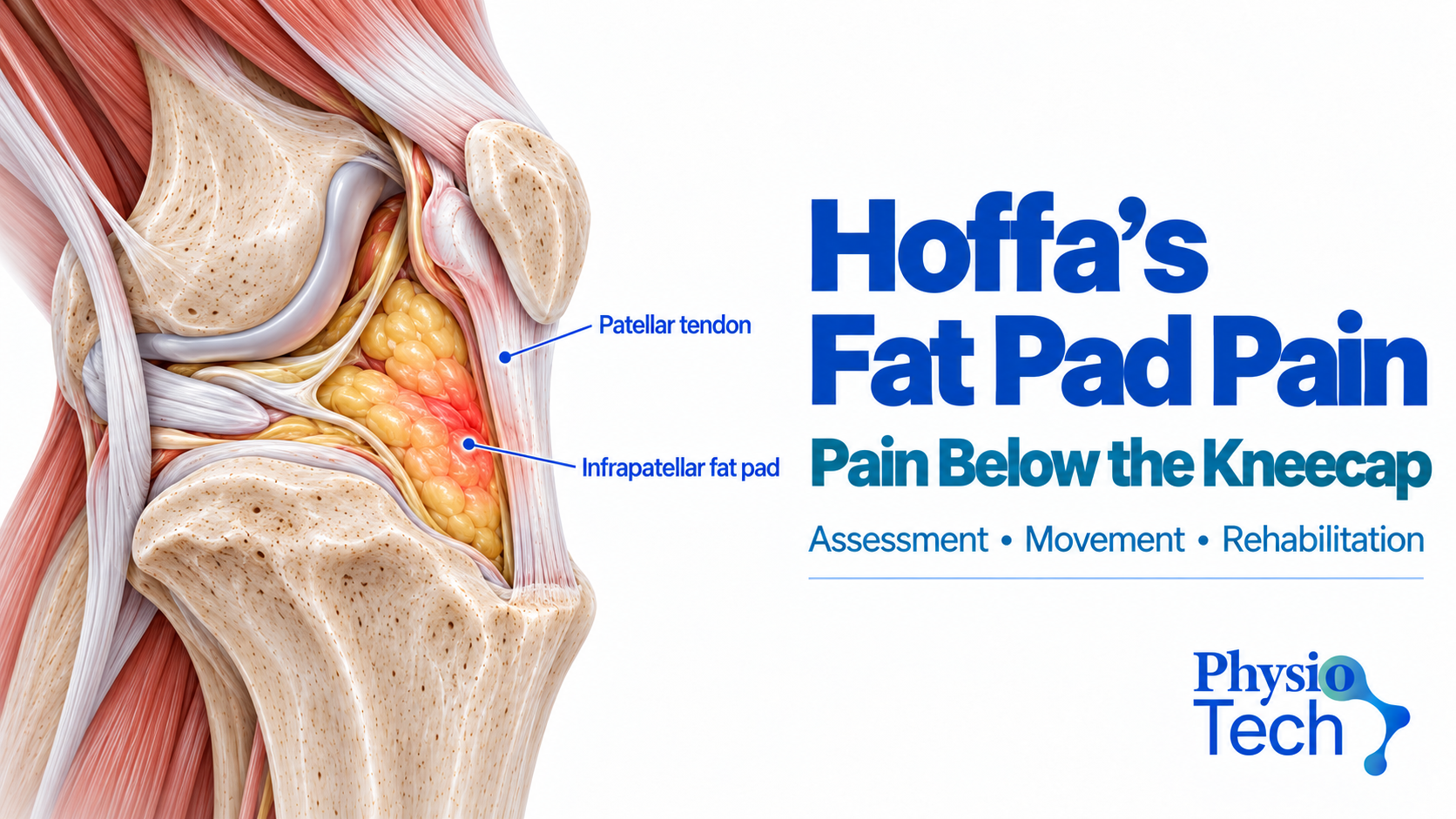
The infrapatellar fat pad is sensitive tissue behind the patellar tendon; its symptoms can mimic other anterior knee problems.

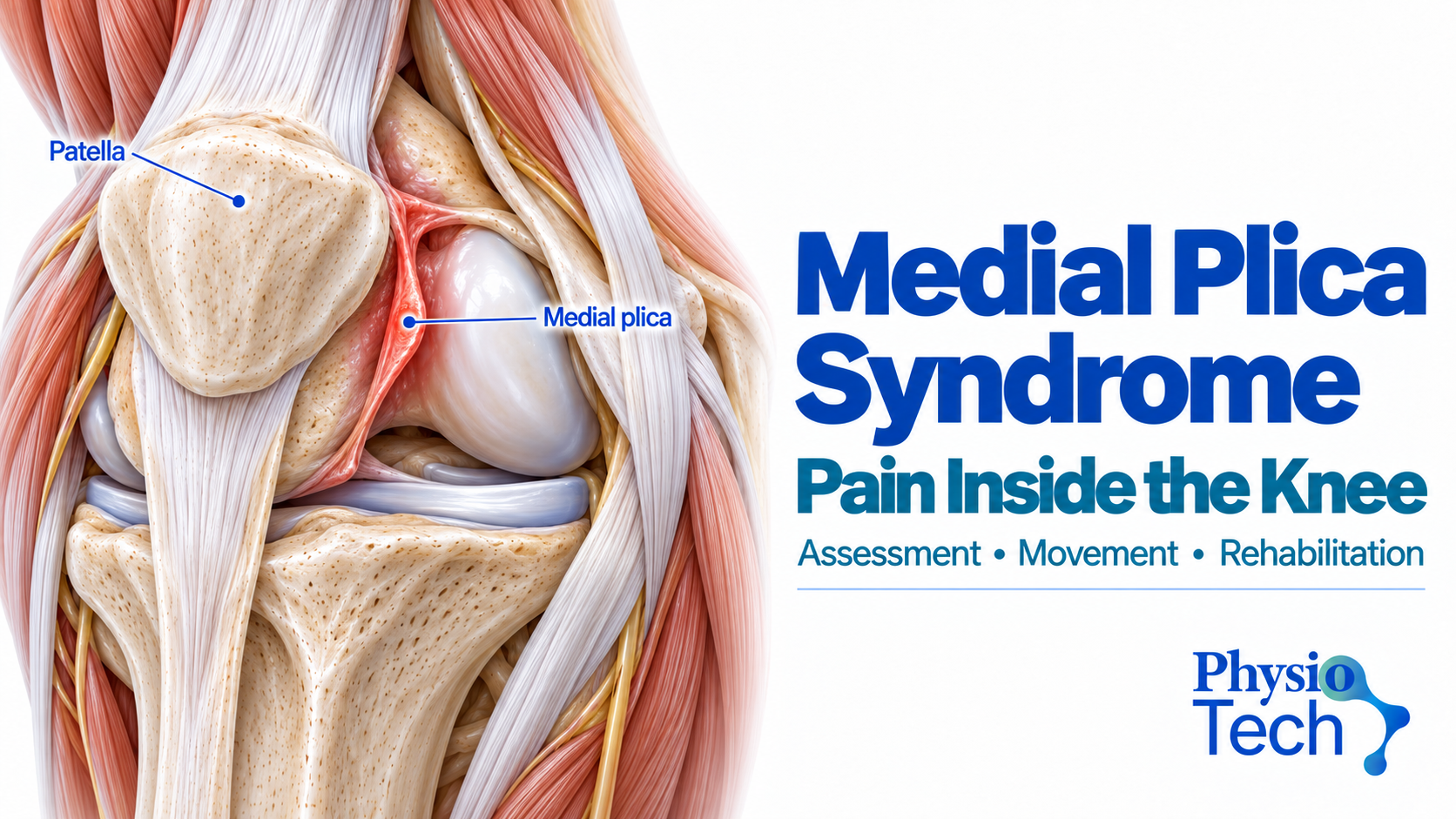
A synovial plica is common normal anatomy; its appearance on imaging does not establish that it causes pain.

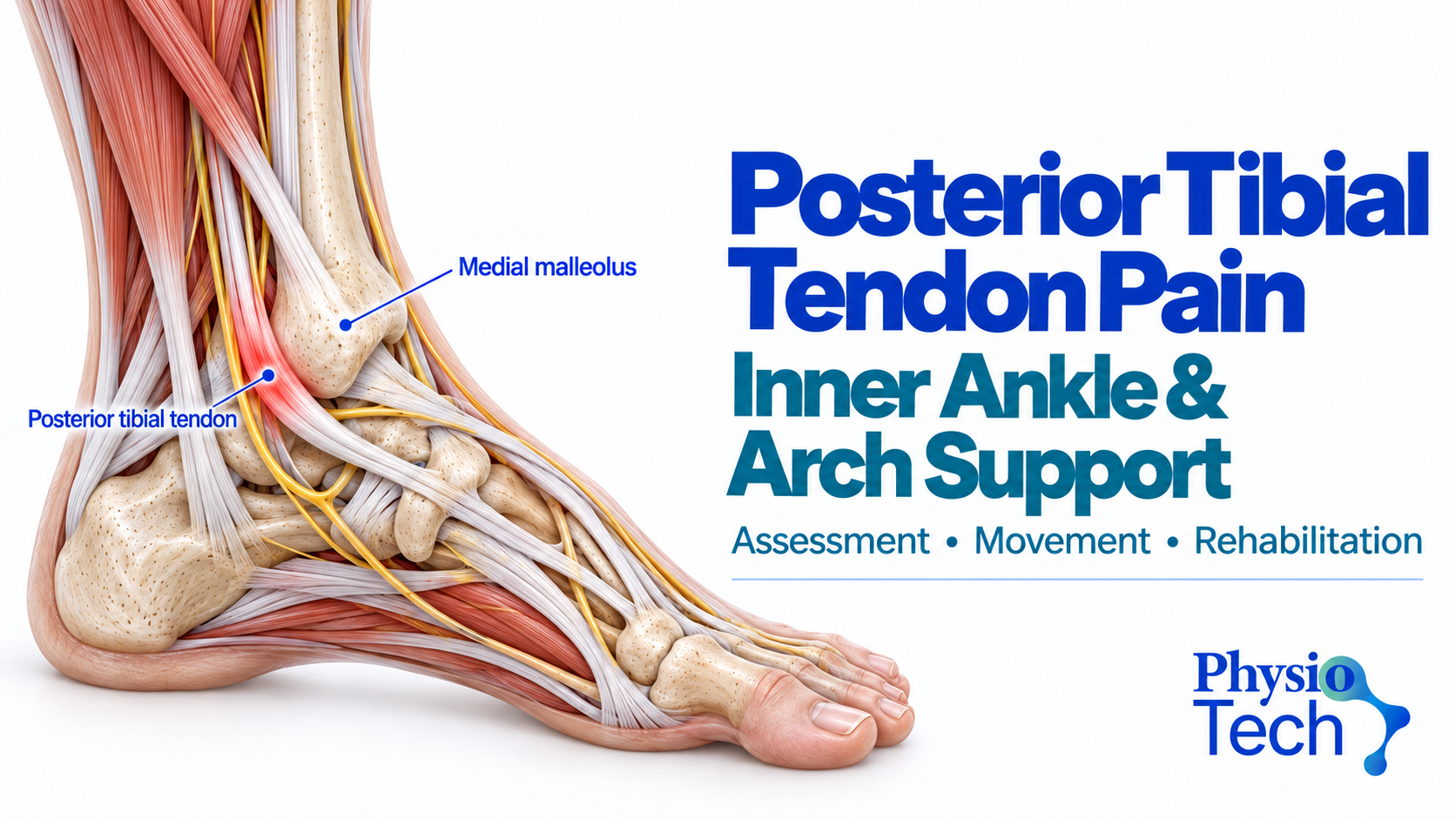
Posterior tibial tendon symptoms can affect walking and single-leg heel raises; assessment distinguishes other inner ankle causes.

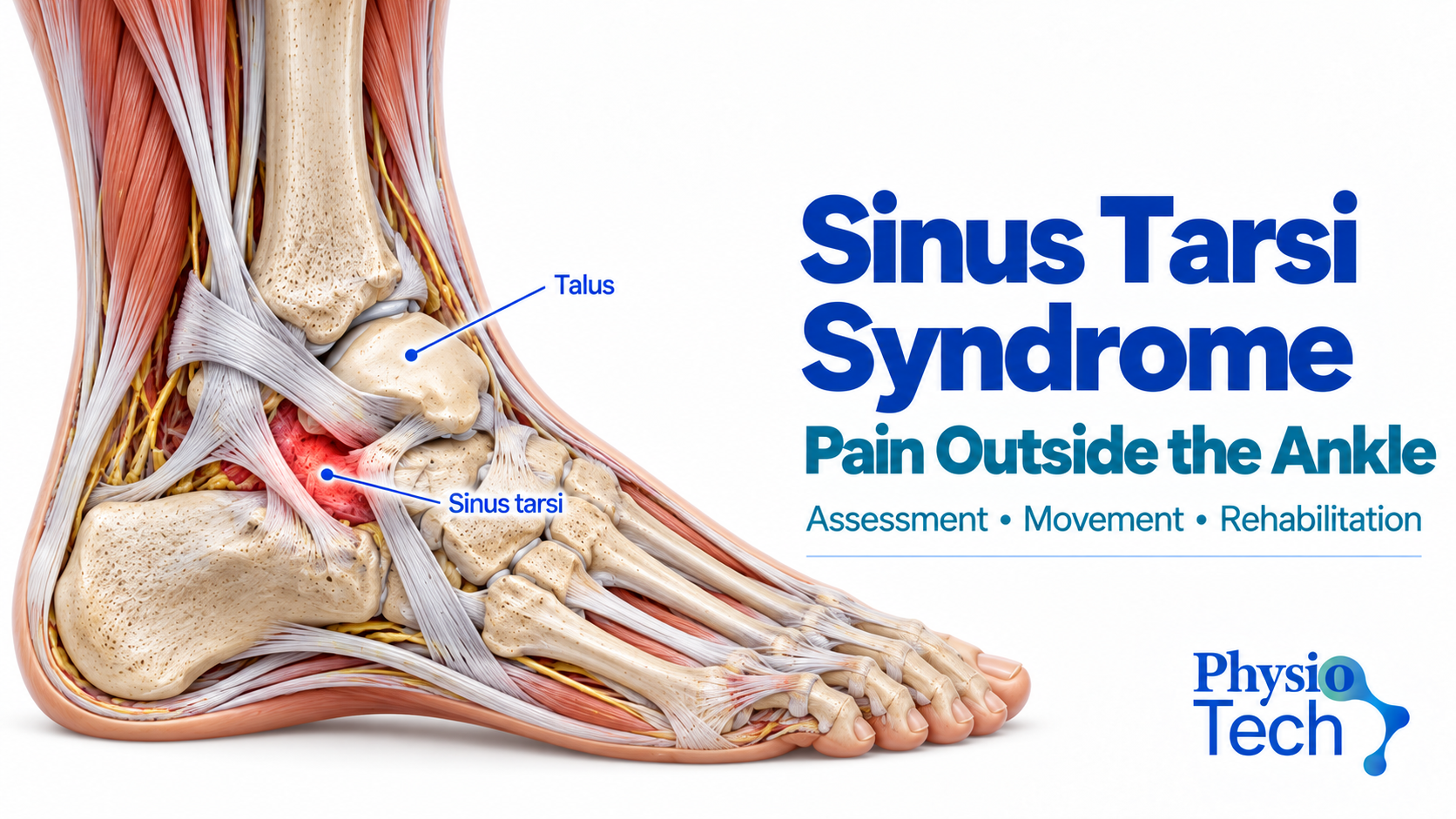
Sinus tarsi pain can follow an ankle sprain, but assessment must distinguish ligaments, tendons, joints and nerve-related symptoms.

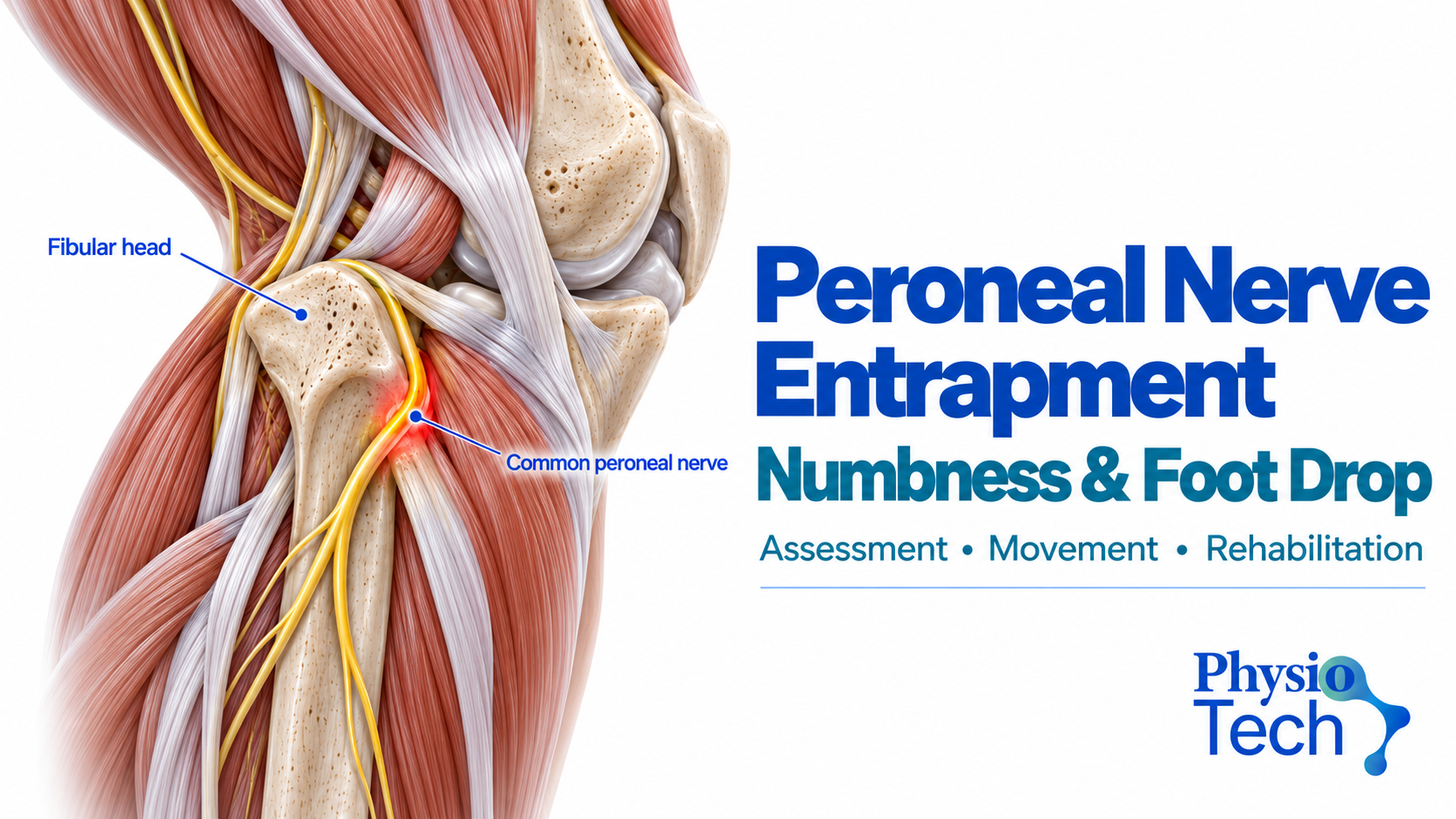
The common peroneal nerve is superficial at the fibular head; new weakness or foot drop requires timely assessment of the site and cause.

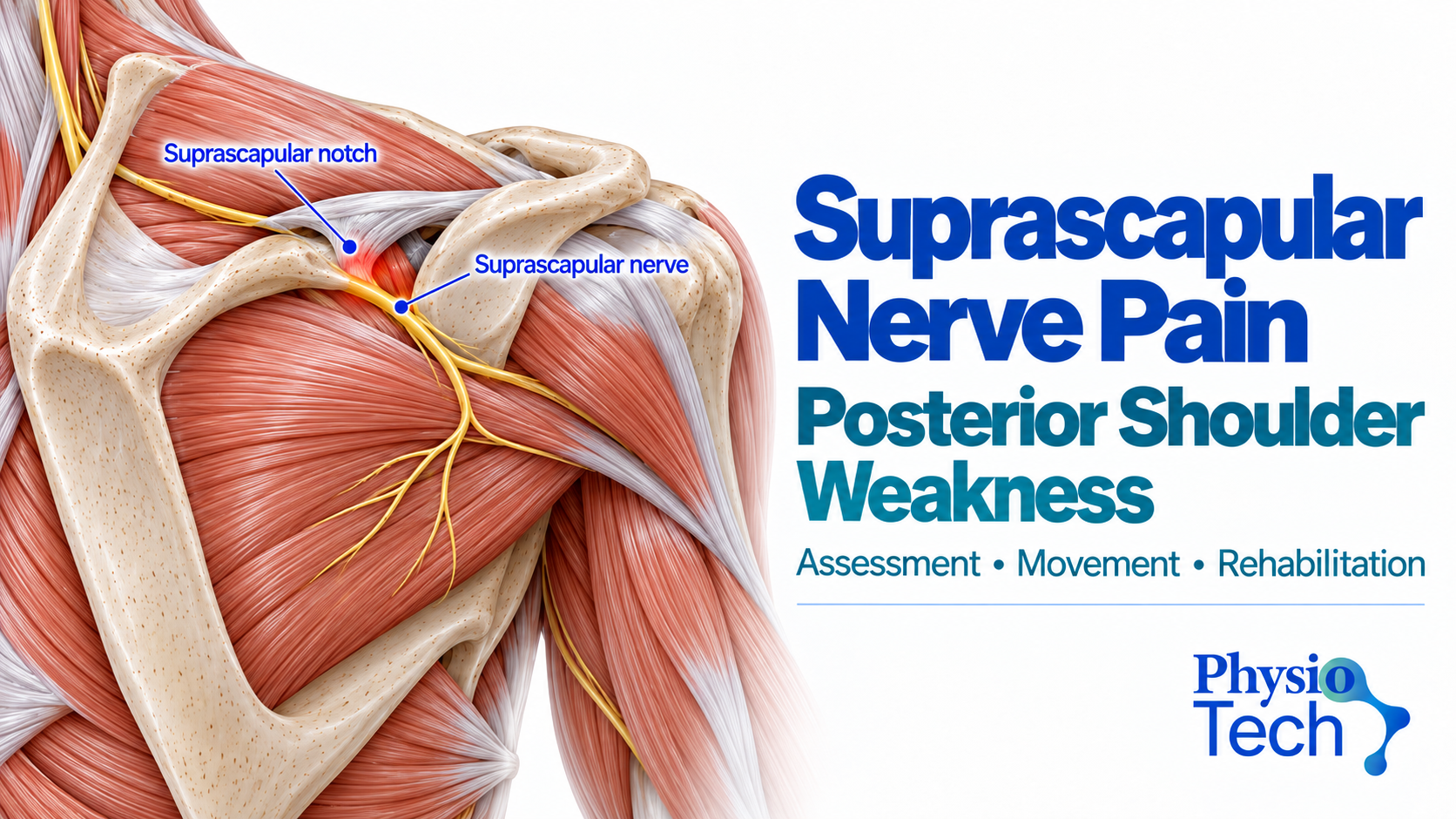
Suprascapular neuropathy is less common than tendon disorders and requires assessment of the neck, rotator cuff and nerve function.